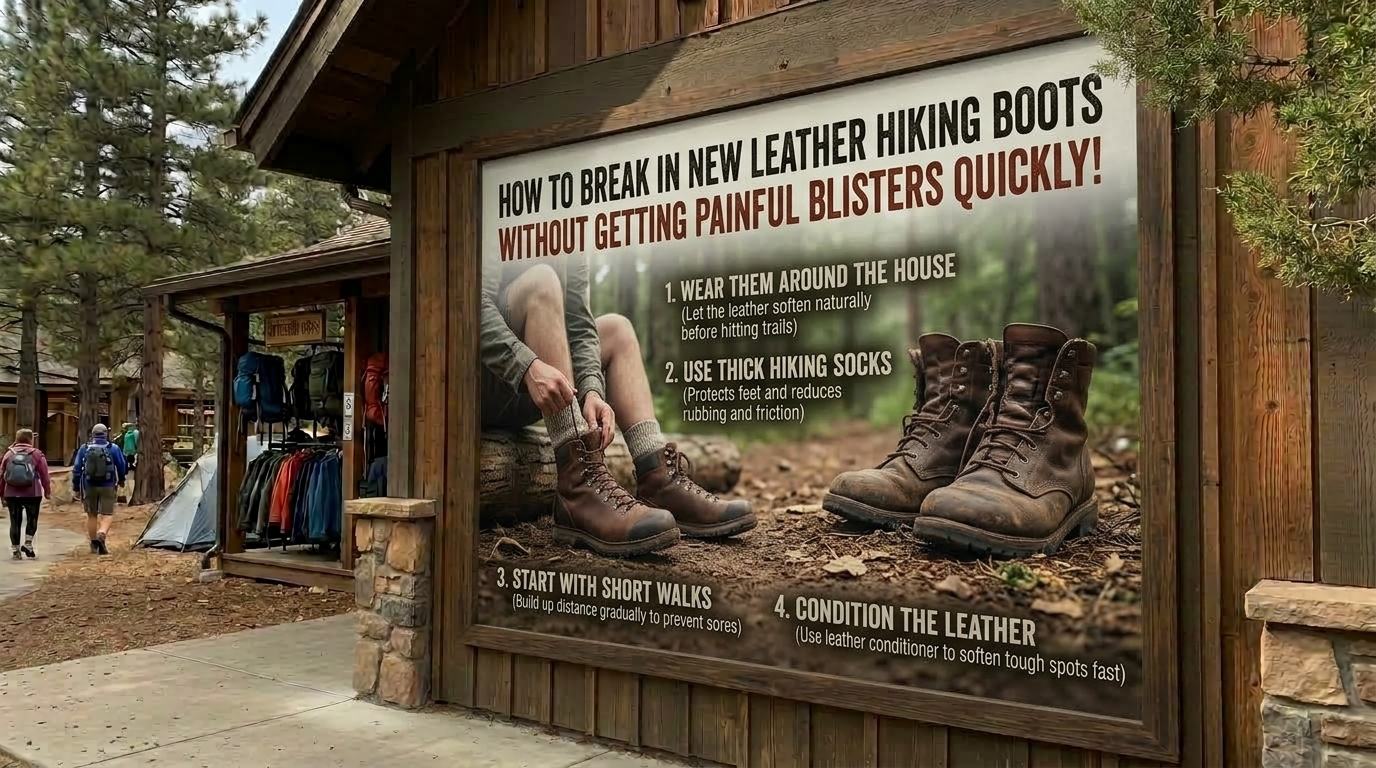
Investing in a high-quality pair of full-grain or nubuck leather hiking boots is one of the best decisions an outdoor enthusiast can make. Unlike synthetic mesh shoes, premium leather boots mold directly to the unique contours of your feet over time, offering unmatched ankle support, superior durability against sharp rocks, and long-lasting waterproof protection.
However, leather has one notorious drawback: the break-in period.
Brand-new leather is stiff, rigid, and unforgiving. Taking a brand-new pair of leather boots straight out of the box onto an 8-mile rugged mountain trek is an almost guaranteed recipe for agonizing hot spots, friction, and raw, bleeding blisters.
Fortunately, you do not have to suffer for your gear. By utilizing proven conditioning techniques, strategic lacing adjustments, and a gradual break-in schedule, you can soften leather quickly and protect your feet from pain.
The Science of Blisters: Why New Leather Hurts
Before tackling the break-in process, it helps to understand what causes blisters in the first place.
- The Friction Triangle: Blisters are formed by a combination of friction, heat, and moisture. When stiff new leather rubs repeatedly against your skin, friction generates heat. Your skin reacts by producing fluid underneath the upper layers to cushion the traumatized tissue, creating a fluid-filled bubble (a blister).
- The Leather Challenge: Full-grain leather is essentially animal hide treated to withstand harsh outdoor elements. In its raw manufactured state, the fibers are tight and inflexible. Until those fibers stretch, soften, and map to your foot’s bone structure, they will act like stiff walls against your heels, ankles, and toes.
Step-by-Step Guide: How to Break in Leather Boots Without Pain
Breaking in boots isn’t just about wearing them; it is about softening the leather fibers safely while protecting your skin. Follow this phased progression to condition your boots before hitting demanding trails.
Phase 1: Indoor Conditioning and Softening (Days 1–3)
Do not take your new boots outside right away. Start by accelerating the softening process indoors.
- Wear Them Around the House: Put on your hiking socks and wear your new boots while doing chores, working at a standing desk, or watching television for 1 to 2 hours a day. This allows your body heat and slight foot movements to begin flexing the leather without risking a miles-long walk far from home.
- Apply Leather Conditioner (If Needed): While modern leather boots often come pre-treated, applying a high-grade leather conditioner or mink oil (following manufacturer instructions) softens the hide fibers instantly, speeding up the molding process. (Note: Avoid heavy oils if your boots use specific waterproof breathable membranes unless recommended, as they can reduce breathability).
Phase 2: Short Neighborhood Walks (Days 4–7)
Once the leather feels slightly more pliable indoors, take your boots out on short, low-stakes excursions.
- Pavement and Flat Dirt Paths: Wear your boots on a 1-to-2-mile walk around your neighborhood or on a flat local park trail.
- Listen to Your Feet: Pay immediate attention to any friction points. The moment you feel a slight pulling or warmth on your heel or pinky toe, stop and address it before a blister forms.
Phase 3: The Hot Spot Intervention (Crucial Step)
If you feel a hot spot during your walks, do not wait for it to turn into a blister.
- Use Preventive Tape: Apply Leukotape or specialized blister prevention tape (like moleskin) directly to your skin over friction-prone areas before you put your socks on. Leukotape has industrial-grade adhesion and stays put even when sweating, acting as a synthetic second skin that absorbs friction instead of your actual skin.
- Check Your Lacing: Often, heel friction occurs because your heel is lifting slightly inside the boot. Use a “runner’s knot” (heel lock) at the top ankle eyelets to anchor your heel firmly back into the heel pocket.
Pro Tips for Advanced Leather Care and Comfort
- Never Skimp on Sock Quality: Cotton is the enemy of blister prevention. Cotton holds sweat against your skin, softening it and maximizing friction. Always wear high-quality, moisture-wicking Merino wool hiking socks (even a double-sock liner system if you are prone to extreme blistering).
- Targeted Stretching: If a specific spot—such as a prominent knuckle or bunion—is pressing painfully against your foot, use a leather stretching spray combined with a manual boot stretcher or take them to a professional cobbler. A cobbler can stretch localized pressure points in minutes using specialized mechanical tools.
- Size Up Properly: Remember that leather boots should always be purchased a half-size larger than your standard street shoes. This leaves room for foot swelling and thick socks on descents.
10 Frequently Asked Questions (FAQs)
1. How long does it typically take to break in leather hiking boots?
Depending on the thickness and quality of the leather, breaking in a pair of boots takes anywhere from 10 to 30 miles of walking spread out over 1 to 3 weeks. Full-grain mountaineering leather takes longer than soft nubuck leather.
2. Should I soak my leather boots in water to break them in faster?
No! Soaking leather boots in water and wearing them dry is an old-school myth that ruins modern footwear. Water strips natural tanning oils out of the leather, causing the hide to shrink, crack prematurely, and warp the internal structure.
3. Can I use alcohol or petroleum jelly to soften leather boots?
Avoid rubbing rubbing alcohol on your boots, as it dries out and destroys leather fibers. While petroleum jelly (Vaseline) can soften leather slightly, it can degrade stitching threads and weaken adhesives over time. Stick to dedicated leather conditioners.
4. What is the best tape to prevent blisters during the break-in period?
Leukotape P is widely considered the gold standard by thru-hikers and backpackers. It is breathable, highly durable, and stays adhered to skin for days, completely stopping friction blisters in their tracks.
5. Why do my heels keep slipping up and down in new leather boots?
Heel slippage happens when the ankle cuff is too loose or the leather hasn’t flexed enough at the instep bend. Adjust your lacing technique to lock your heel down, or add a heel-gripping insert.
6. Do synthetic boots require a break-in period like leather boots?
No. Synthetic mesh hiking boots are flexible right out of the box and generally require little to no break-in time, though they lack the long-term durability and custom molding of full-grain leather.
7. What should I do if a blister already forms despite my precautions?
If a blister is small, leave the roof of the blister intact, as it acts as a sterile natural bandage. Cover it with a hydrocolloid bandage and secure it with medical tape. If it is large and painful, sterilize a needle, drain the fluid carefully while leaving the skin flap, and apply protective antiseptic and padding.
8. How do I know if my boots are simply too small rather than just un-broken-in?
If your toes are jamming painfully into the absolute front of the boot when walking downhill—or if the boot width crushes your metatarsals so tightly that your toes go numb—the boots are too small, and breaking them in will not fix a sizing issue.
9. Can a shoe repair shop (cobbler) break in or stretch my boots for me?
Yes! Cobblers have professional mechanical boot stretchers that can safely widen the toe box or raise the instep volume by a quarter-size without damaging the leather.
10. How should I store my leather boots after breaking them in?
Store them in a cool, dry, well-ventilated area away from direct sunlight and extreme heat sources (like radiators or fireplaces), which dry out and crack leather. Clean them regularly and reapply conditioner to maintain suppleness.
Conclusion
Breaking in new leather hiking boots does not have to be an agonizing ordeal filled with painful blisters and raw skin. By understanding the mechanics of leather softening, investing in moisture-wicking Merino wool socks, utilizing preventive taping techniques like Leukotape, and following a gradual indoor-to-outdoor break-in schedule, you can safely mold your boots to your feet. Once fully broken in, your premium leather boots will reward you with years of peerless ankle support, weather protection, and cloud-like trail comfort.
Leave a Reply