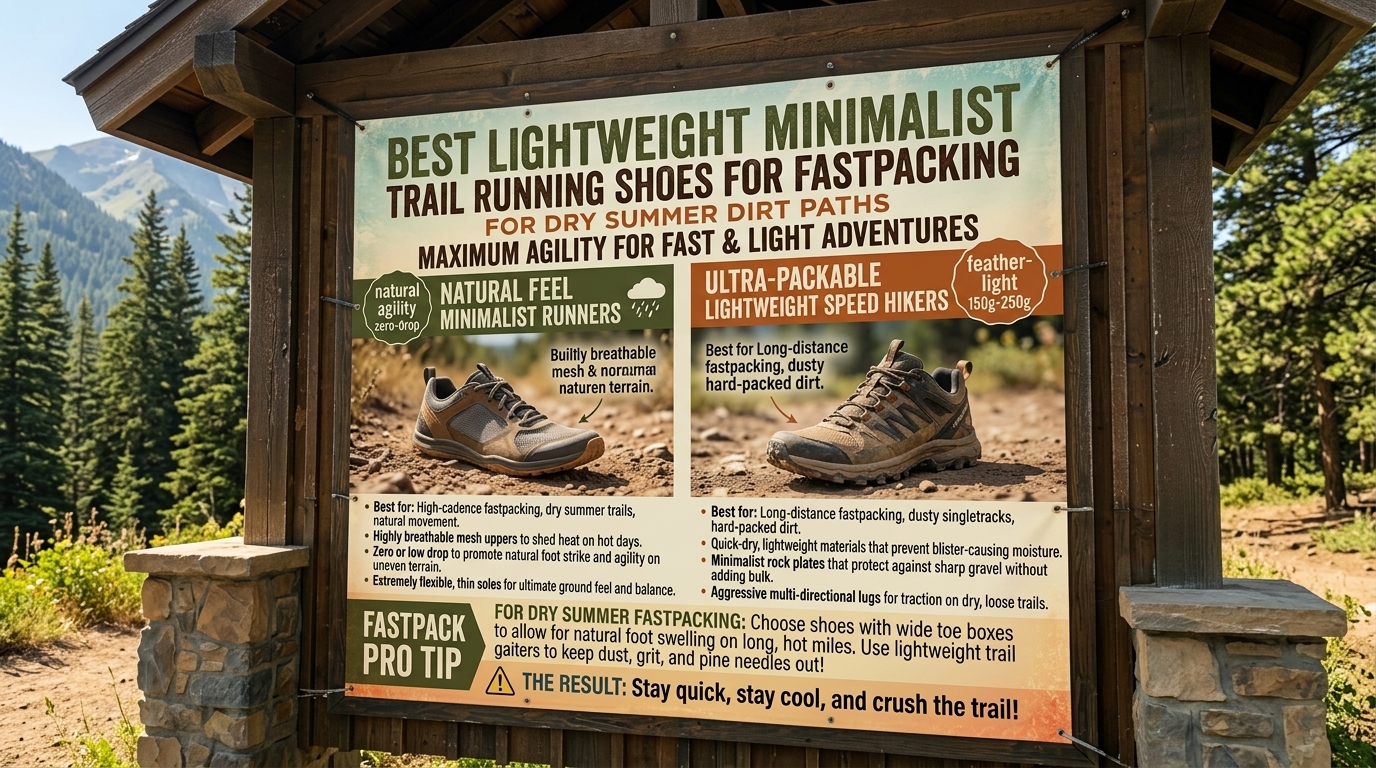
When the summer sun bakes the dirt tracks and the call of the backcountry grows irresistible, traditional heavy backpacking gear starts to feel like an anchor. Enter fastpacking—the exhilarating hybrid of ultra-lightweight backpacking and trail running. By shedding excess pounds and covering long distances at a swift, rhythmic pace, fastpackers can knock out multi-day itineraries in a fraction of the time.
However, your choice of footwear can make or break your trip. When you are logging 20 to 30 miles a day over dry summer dirt paths with a loaded pack, heavy hiking boots will exhaust your legs and cook your feet. What you need are lightweight minimalist trail running shoes: footwear that offers agility, supreme breathability, exceptional ground feel, and zero unnecessary bulk.
Whether you are tearing down dusty switchbacks in California, navigating arid trails in Texas, logging high-mileage dirt paths in Washington, or taking a weekend escape from San Francisco and New York, this comprehensive guide covers everything you need to know about choosing and utilizing minimalist trail runners for summer fastpacking.
Why Minimalist Trail Running Shoes Excel for Fastpacking
Fastpacking requires a delicate balance. You are carrying a multi-day pack (typically weighing between 15 to 25 pounds), yet you want the speed and freedom of a trail runner. Traditional hikers provide rigid structure, but minimalist and agile trail running shoes offer distinct advantages tailored for dry, hot summer conditions.
1. Featherweight Agility and Reduced Fatigue
In biomechanics, every ounce on your feet feels like five pounds on your back. Traditional hiking boots weigh anywhere from 2 to 4 pounds per pair. Lightweight minimalist trail runners often weigh under 20 ounces per pair. Reducing rotational weight at your ankles drastically cuts down leg fatigue over long summer days, allowing you to maintain a fluid stride from dawn until dusk.
2. Unrivaled Breathability for Summer Heat
Dry summer dirt paths kick up intense heat and fine dust. Minimalist trail shoes utilize open, ultra-permeable mono-mesh or engineered synthetic uppers. This high airflow allows sweat vapor to escape instantly, keeping your feet cool, dry, and free from the soggy skin maceration that causes blisters.
3. Superior Ground Feel and Proprioception
Minimalist shoes typically feature lower stack heights (the distance between your foot and the ground) and flexible midsoles. This encourages a natural midfoot or forefoot strike, enhancing your proprioception—your body’s ability to sense the terrain underfoot. You can feel rocks, roots, and loose dirt intuitively, allowing you to react quickly and avoid turned ankles.
Key Features to Look For in Fastpacking Trail Shoes
Not all trail running shoes are built to handle the structural demands of carrying a backpack. When shopping for minimalist fastpacking shoes, evaluate these critical performance metrics:
- Outsole Traction (Lug Depth): For dry summer dirt paths, look for multi-directional rubber lugs ranging from 3mm to 5mm deep. Sticky rubber compounds (like Vibram Megagrip) provide phenomenal friction on loose scree, granite slabs, and dry hard-packed soil.
- Midsole Cushioning: Minimalist doesn’t have to mean zero cushioning. Look for low-to-moderate stack heights with responsive foam (such as EVA or supercritical foams) that absorb sharp impacts from rocks without completely deadening ground feel.
- Rock Plate Protection: Many minimalist shoes feature a thin, flexible rock plate embedded in the forefoot. This is vital for fastpacking; it protects the sensitive ball of your foot from bruising when you step hard onto sharp stones while wearing a heavy pack.
- Non-Waterproof (Mesh) Uppers: For dry summer paths, avoid waterproof membranes (like Gore-Tex). Waterproof shoes trap sweat in hot weather. Instead, opt for pure mesh uppers that breathe freely and dry in minutes if you encounter water.
Top Lightweight Minimalist Trail Running Shoes for Summer Fastpacking
Here are the top-performing, highly breathable trail running shoes engineered for high-mileage fastpacking on dry summer dirt paths.
1. Altra Lone Peak (8 or Latest Edition)
- Weight (Per Pair): Approx. 20 oz – 21 oz
- Why It Works: The Altra Lone Peak is practically the uniform of long-distance through-hikers and fastpackers. It features Altra’s signature FootShape toe box, which lets your toes splay out naturally, eliminating lateral pinch and bunion pain. With a balanced zero-drop platform, moderate cushioning, a flexible stone guard, and a sticky MaxTrac outsole, it provides unmatched comfort and foot freedom on dry dirt paths.
2. Saucony Peregrine (13 or 14)
- Weight (Per Pair): Approx. 20 oz
- Why It Works: If you want a more secure, locked-in racing fit with a slightly lower profile, the Saucony Peregrine is an elite choice. It features PWRRUN cushioning that strikes a brilliant balance between ground feel and impact protection, paired with aggressive 5mm lugs for biting into loose dirt and dust. Its lightweight, durable upper breathes exceptionally well in summer heat.
3. Brooks Cascadia (17 or Latest Lightweight Variant) / Catamount 3
- Weight (Per Pair): Approx. 19 oz – 21 oz
- Why It Works: The Brooks Catamount series is specifically designed for fast, technical trail running and lightweight fastpacking. Utilizing a lightweight nitrogen-infused foam midsole and a flexible ballistic rock plate protection system, it handles high speeds over rocky western trails and dusty California paths with remarkable stability.
4. Hoka Torrent 3
- Weight (Per Pair): Approx. 18 oz
- Why It Works: While Hoka is famous for maximalist, thick-soled shoes, the Torrent line is their lightweight, streamlined racer. It strips away bulky foam to provide a nimble, minimalist ride with responsive cushioning. The open-engineered mesh upper breathes like a dream in scorching summer weather, and the multi-directional lugs grip dry dirt tracks securely.
Essential Tips for Fastpacking in Minimalist Shoes
Transitioning to lightweight minimalist trail runners for multi-day fastpacking trips requires a few strategic adjustments to protect your feet and body.
- Build Up Your Mileage Gradually: Minimalist shoes feature lower drop heights and less artificial arch support. If you are used to stiff, heavy boots, your Achilles tendons and calves will need time to adapt. Do shorter day hikes before launching into a 50-mile fastpacking trip.
- Manage Trail Dust and Debris: Because minimalist shoes have low collars and breathable mesh, fine summer dust and grit will inevitably get inside. Pair your shoes with lightweight, low-profile running gaiters (like Dirty Girl gaiters) to seal the gap between your shoe and your sock.
- Embrace Wool or Synthetic Toe Socks: Friction between toes is a primary cause of blisters when moving fast. Pairing minimalist wide toe-box shoes with moisture-wicking toe socks (like Injinji) completely eliminates skin-on-skin toe friction.
- Keep Your Pack Weight Low: Minimalist trail shoes sacrifice structural support for agility. To make them work comfortably, keep your base pack weight under 15–20 pounds.
Frequently Asked Questions (FAQs)
1. Can I use minimalist trail running shoes for multi-day backpacking with a heavy pack?
Yes, thousands of long-distance backpackers use trail runners for multi-month through-hikes. However, because they lack rigid ankle support, your foot and ankle muscles must work harder, making a lightweight, ultra-light pack setup essential.
2. Are waterproof trail running shoes better for summer fastpacking?
No. In dry summer conditions, waterproof membranes trap body heat and sweat inside the shoe, causing your feet to overheat, swell, and blister. Breathable, non-waterproof mesh shoes are vastly superior for summer dirt paths.
3. What is a “zero-drop” shoe, and is it good for fastpacking?
A zero-drop shoe (like Altra models) means the heel and forefoot are at the exact same height from the ground, mimicking barefoot posture. Many fastpackers love zero-drop for its natural stride, but if you have tight calves, transition slowly to avoid strain.
4. How many miles do minimalist trail running shoes last?
Most lightweight trail running shoes last between 300 to 500 miles. Because they use lighter, minimalist foams and breathable meshes, they tend to pack out and lose cushioning slightly faster than heavy leather boots.
5. Do I need a rock plate in my fastpacking shoes?
If you are fastpacking on rocky, technical dirt paths while carrying a loaded pack, a flexible rock plate (or dense rock-protection layer) is highly recommended to prevent sharp stones from bruising the soles of your feet.
6. How do I keep fine dust out of my mesh trail runners?
Wearing lightweight trail gaiters that attach to the laces and heel of your shoe is the single most effective way to keep dirt, sand, and pebbles from entering your shoes on dry trails.
7. Should I size up when buying trail running shoes for fastpacking?
Yes. When fastpacking downhill for miles, your feet swell and slide forward. Buying your trail runners a half-size larger than your casual street shoes prevents your toes from smashing against the front of the toe box.
8. Are minimalist shoes stable enough for uneven terrain?
Yes. Because your foot sits closer to the ground (low stack height), your center of gravity is lower, which actually reduces the likelihood of rolling your ankle compared to standing on top of thick, high-platform soles.
9. What socks work best with breathable minimalist shoes?
Thin-to-medium cushion merino wool or synthetic moisture-wicking socks work best. Avoid cotton completely, as it retains sweat and causes friction blisters within minutes.
10. How do I clean and dry my mesh trail shoes on a multi-day trip?
At camp, take out the insoles and brush off any dried dust. If they get wet or sweaty, strap them to the outside of your pack during the afternoon hike or prop them up in a breezy, shaded spot to air dry overnight.
Conclusion
Fastpacking across dry summer dirt paths is one of the most rewarding ways to experience the backcountry, granting you the freedom to move swiftly, travel light, and cover massive ground. By swapping heavy boots for lightweight minimalist trail running shoes—such as the Altra Lone Peak or Saucony Peregrine—you will shed leg fatigue, keep your feet cool in soaring summer temperatures, and enjoy an agile, uninhibited stride. Dial in your pack weight, protect your feet from dust, and embrace the ultimate fastpacking experience on your next trail adventure.
Leave a Reply