There is few experiences in the backcountry quite as miserable as waking up in a chilly, rain-soaked tent, pulling on your gear, and forcing your bare feet into a pair of ice-cold, waterlogged hiking boots. When you are camping in persistent damp or rainy conditions—whether you’re navigating the misty, rain-drenched Olympic rainforests in Washington, trekking through slick mountain paths in New York, or caught in sudden downpours in California or Texas—getting your boots wet is almost inevitable.
Worse yet, letting moisture sit inside your footwear overnight guarantees cold toes, skin breakdown, painful friction blisters, and the slow structural rot of your boots.
Drying hiking boots overnight without modern electricity or a household dryer sounds like an impossible challenge, but field-tested backcountry techniques can successfully extract moisture while you sleep. This comprehensive guide covers everything you need to know to wake up to warm, dry boots.
1. The Golden Rule of Drying Boots: Avoid High Heat
Before executing any overnight drying trick, understand the cardinal rule of footwear maintenance: Never place your boots directly on a camp stove, over an open campfire, or right against a roaring heater.
- The Science of Disaster: High heat destroys hiking boots. Excessive temperatures melt the industrial adhesives holding the rubber soles to the midsoles, warp synthetic components, shrink waterproof membranes, and cause high-grade leather to crack, brittle, and split permanently.
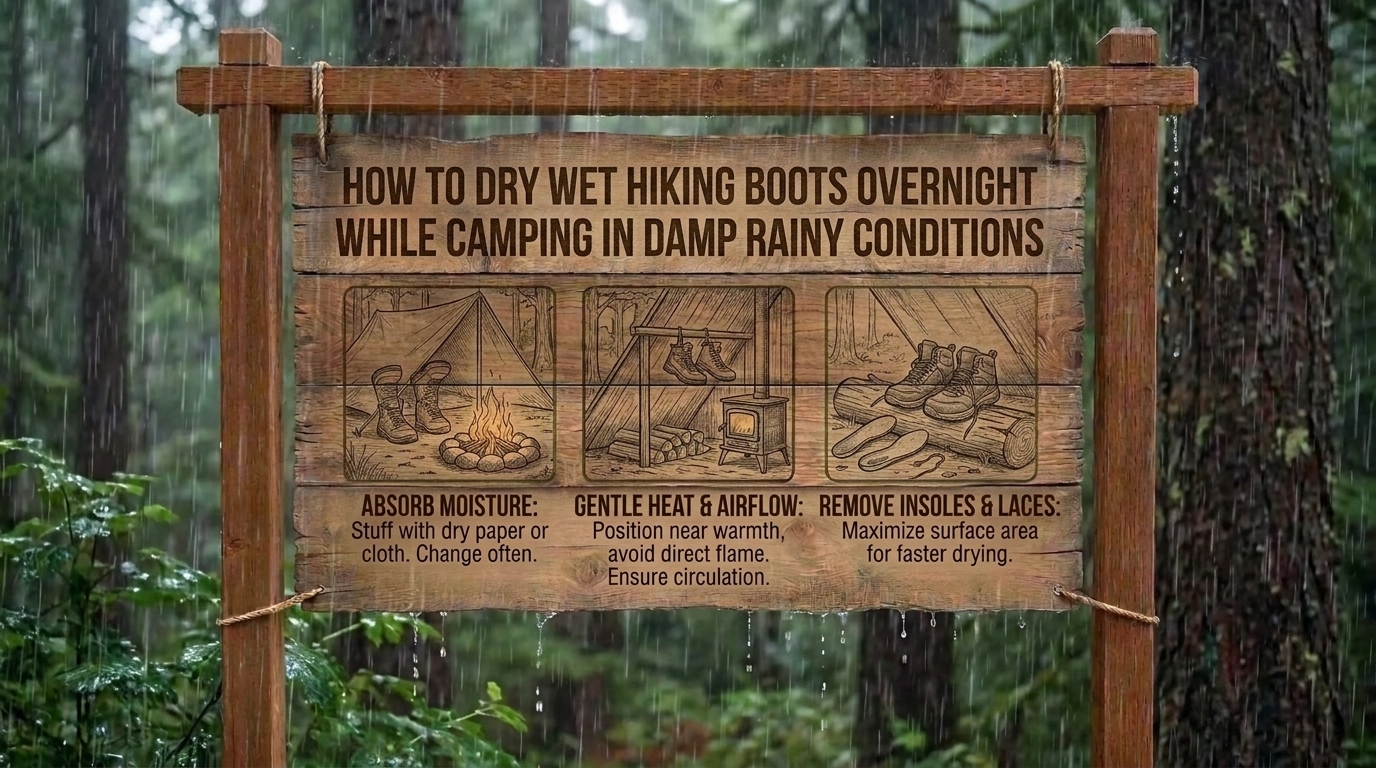
- The Safe Zone: If you use ambient heat from a fire, your boots should only be placed far enough away that the air feels comfortably warm to your bare hand—never hot.
2. Step-by-Step Preparation: Prep Before You Sleep
As soon as you arrive at camp and set up your shelter, your drying protocol must begin immediately. Do not leave wet boots sitting zipped inside a damp vestibule untouched.
Step 1: Strip the Hardware
- Pull the Insoles: Remove the footbeds completely. Insoles are dense, trap the vast majority of internal moisture, and will never dry while crammed inside the boot. Lay them flat inside your tent or sleep them near your sleeping bag.
- Remove the Laces: Untie and loosen the laces completely, pulling the tongue forward as far as possible. This opens up the throat of the boot, maximizing internal air circulation.
Step 2: Knock Out Mud and Standing Water
- Turn the boots upside down and slap them together or tap them against a rock to shake out trapped grit, pebbles, and pooled water. Use a damp cloth or sponge to wipe away surface mud so it doesn’t bake into the pores overnight.
3. Proven Field Methods to Dry Boots Overnight
Depending on what gear and supplies you have packed in your backpack, utilize one of these reliable backcountry drying strategies:
Method A: The Classic Newspaper / Rag Stuffing Trick
If you packed extra camp towels, spare clean socks, or managed to grab some newspaper or paper towels before leaving civilization, this is a staple method:
- Crumple up paper or fabric loosely and pack it tightly down into the toe box and up through the ankle shaft.
- The Magic Step: The paper will rapidly absorb the internal standing water. Do not leave it in all night. Check your boots 1 to 2 hours later before you go to sleep, pull out the soggy paper, and replace it with a fresh, dry batch.
Method B: The Warm-Rock Technique (Use With Extreme Caution)
If you have a campfire and need an active heat source without melting your footwear:
- Find a smooth, dry stone roughly the size of a fist. Place it near the edge of the fire (not directly in roaring flames) until it is comfortably warm to the touch—never hot enough to scorch cloth or skin.
- Wrap the warm rock in a clean bandana or spare sock (to protect the inner lining from burning) and slide it deep into the toe of the boot. The gentle, sustained radiant heat will drive out moisture from the inside out all night long.
Method C: Tent-Hanging and Air Circulation
In damp conditions, ground humidity will keep shoes wet if they sit on the floor of a wet vestibule.
- Hang your boots upside down from loops inside your tent mesh or from a sturdy line using your laces or carabiners, elevating them off the damp ground.
- If there is a gentle breeze, let natural cross-ventilation flow through the tent mesh to carry evaporating moisture away.
4. Frequently Asked Questions (FAQ)
1. Can I sleep with my wet boots inside my sleeping bag?
Yes, this is a classic ultralight backpacking survival trick! Placing your wet socks or boot insoles (wrapped inside a dry sack or ziplock bag) near the bottom of your sleeping bag uses your body heat overnight to dry them. However, putting full, muddy boots inside your sleeping bag is messy and generally discouraged unless you are facing life-threatening freezing temperatures.
2. What happens if I put my wet boots directly over a camp stove?
You risk catastrophic gear failure. Direct, intense flame or stove heat can instantly melt synthetic mesh, warp rubber outsoles, ruin waterproof Gore-Tex membranes, and delaminate the entire boot structure beyond repair.
3. Does putting rice or cat litter inside boots work while camping?
While filling a spare sock with silica cat litter or dry rice acts as a desiccant and absorbs moisture, carrying extra pounds of cat litter or rice on a backpacking trip is impractical. It is far better to use spare clothing, pack towels, or newspaper.
4. Why are my waterproof Gore-Tex boots taking so long to dry?
Waterproof membranes keep external water out, but when water does get in over the collar or through a tear, that same membrane traps the water inside like a plastic bucket, preventing it from evaporating easily. Removing the insoles and widening the tongue is mandatory.
5. Should I apply waterproofing wax to wet boots to protect them?
No. Never apply heavy wax, oils, or waterproofing sprays to soaking wet leather. Trapping moisture inside the hide with thick wax prevents evaporation and accelerates rotting and mold growth. Wait until the boots are fully dry before conditioning them.
6. Is it safe to wear wet boots the next morning?
If you have no choice, yes, but it requires precautions. Put on a pair of clean, dry, thick merino wool socks, slip your feet into the damp boots, and lace them snugly. Your feet will feel cold for the first ten minutes, but physical activity will quickly warm them up. Prevent blisters by taping hot-spot areas proactively.
7. How can I keep my boots dry inside the tent overnight?
Never leave your boots out in the open air of a rainy campsite overnight, where morning dew and falling mist will soak them further. Store them inside your tent’s dry vestibule or place them inside a large plastic trash bag or gear sack right next to your head.
8. What is the best type of sock to wear when hiking in wet conditions?
Always wear high-quality merino wool socks. Unlike cotton, which holds water and freezes your feet, merino wool retains its insulating properties even when soaking wet, keeping your feet significantly warmer in adverse weather.
9. Can I use chemical hand warmers to dry my boots?
Yes! Tossing a couple of activated air-activated chemical hand warmers (like HotHands) into the toe boxes of your boots overnight provides a safe, low-level, controlled source of gentle heat that helps drive out internal moisture without melting your gear.
10. How do I prevent my boots from smelling bad after getting soaked?
Wet, warm boots left in dark spaces breed odor-causing bacteria rapidly. As soon as you return home from your trip, pull the insoles, wash the interior with a mild antimicrobial soap solution, and let them dry completely in a well-ventilated, shaded room.
Conclusion
Drying wet hiking boots overnight while camping in damp, rainy conditions requires patience, discipline, and the avoidance of dangerous high-heat sources. By stripping out your insoles, loosening the laces, stuffing them with absorbent materials, and utilizing ambient body or gentle camp heat, you can wake up to manageable footwear and protect your feet on the trail. Pack smart, manage your gear proactively, and never let a little rain stop your adventure.
Leave a Reply