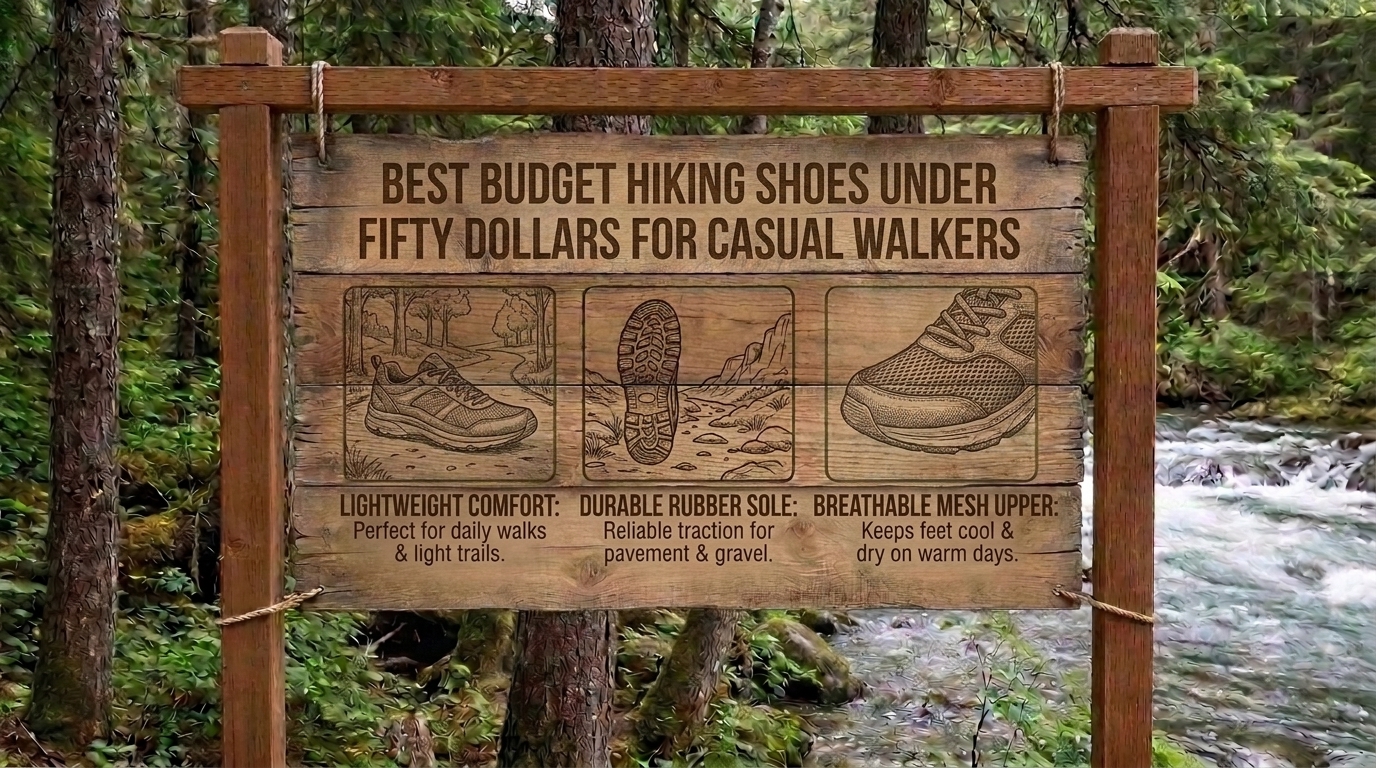
When you want to enjoy a weekend stroll through a local state park, walk your dog on unpaved neighborhood paths, or explore easy walking trails on vacation, you don’t necessarily need to drop two hundred dollars on technical, high-alpine mountaineering shoes.
However, finding reliable outdoor footwear when you are shopping on a tight budget can feel like navigating a minefield of cheap, unbranded products that fall apart after three uses. Casual walkers need comfort, decent traction, and light protection without paying for advanced features they will never use.
This comprehensive guide explores what to look for in sub-fifty-dollar footwear, evaluates realistic budget options, and helps casual walkers make a smart, economical choice.
1. The Reality of Buying Hiking Shoes Under $50
Let’s address the elephant in the room: in the modern outdoor gear market, finding a true, technical, brand-name hiking shoe (like Salomon, Merrell, or Danner) for under fifty dollars is nearly impossible at retail price, as those models typically start around $100 to $180.
However, for casual walkers who stick to flat dirt paths, gravel loops, and dry park trails, you don’t need a technical alpine shoe. Instead, your best budget options fall into specific categories:
- Entry-Level Athletic Trail Runners: Affordable runner-style shoes built with deeper rubber tread patterns than standard fashion sneakers.
- Minimalist / Barefoot Walking Shoes: Brands like Whitin or Oranginer have dominated the sub-$50 budget category on platforms like Amazon, offering flexible soles and wide toe boxes.
- Sales, Clearance, and Closeouts: Previous-season models found on outlet sites or seasonal clearance racks.
2. Top-Rated Budget Footwear Options for Casual Walkers
1. WHITIN Men’s / Women’s Minimalist Trail Runner
- Approximate Price: $40 – $48
- Why it fits casual walkers: WHITIN has built a massive following among budget-conscious walkers and light hikers. These shoes feature a wide, foot-shaped toe box that lets your toes splay naturally, a flexible sole, and a grippy rubber outsole with multi-directional lugs that handle dirt tracks and gravel easily. They are lightweight, highly breathable, and punch way above their price tag for flat, casual nature walks.
2. Mishansha Lightweight Hiking Sneakers
- Approximate Price: $35 – $45
- Why it fits casual walkers: Designed specifically as an entry-level outdoor shoe, Mishansha models feature a protective toe cap, a cushioned EVA midsole for shock absorption, and a textured rubber sole. They are ideal for casual walkers who want something that looks like a traditional hiking shoe but remains soft, flexible, and comfortable right out of the box for backyard trails or park walks.
3. Budget Closeouts and Outlet Finds (Merrell, Columbia, or Adidas Terrex Sales)
- Approximate Price: $45 – $60 (on deep discount)
- Why it fits casual walkers: If you keep an eye on online outlet retailers or end-of-season sales, you can occasionally snag entry-level models from trusted legacy brands like Columbia or older generation Adidas Terrex shoes close to the $50 mark. These offer superior midsole foam and brand-name rubber durability compared to generic budget labels.
3. Key Features to Look For (Even on a Budget)
Even when spending under fifty dollars, do not compromise on these basic essentials:
- Tread Depth: Avoid completely smooth-soled fashion sneakers. Look for rubber outsoles with raised chevron or waffle-pattern lugs to prevent slipping on loose dirt or pine needles.
- Toe Protection: A reinforced rubber or synthetic toe bumper protects your toes from stubbing against hidden tree roots or rocks along the trail.
- Breathability: Choose mesh-heavy uppers if you walk in warm weather (like Texas, California, or San Francisco) to keep your feet cool and prevent excessive sweating.
4. Frequently Asked Questions (FAQ)
1. Are hiking shoes under $50 safe for rocky mountain trails?
No. Sub-$50 shoes generally lack stiff protective shanks, ankle support, and durable rock-plates. Taking inexpensive budget shoes onto sharp, rocky, high-alpine terrain can lead to bruised feet, twisted ankles, and rapid wear-and-tear on the soles. They are strictly best for casual walkers on flat, maintained paths.
2. Can I use cheap running shoes instead of buying budget hiking shoes?
Yes! For casual walkers on dry, smooth dirt paths, a comfortable pair of running or walking shoes works wonderfully. However, keep in mind that running shoes have softer foam outsoles that wear down faster on gravel and abrasive dirt surfaces.
3. Are cheap hiking shoes waterproof?
Generally, no. Shoes priced under fifty dollars rarely feature reliable waterproof membranes like Gore-Tex. If they claim to be waterproof using a generic coating, that coating often wears off quickly or traps internal sweat, turning the shoe into a swamp. Non-waterproof mesh budget shoes are usually much more comfortable.
4. How long do sub-$50 hiking shoes typically last?
Budget footwear usually lasts between 100 to 250 miles of walking, or about 6 to 12 months of regular casual use, depending on the terrain. The soft rubber outsoles and budget EVA midsoles compress and lose their cushioning faster than premium boots.
5. What is the best way to make budget shoes more comfortable?
If your budget shoes feel a bit stiff or lack arch support, invest in an inexpensive pair of aftermarket insoles (like Dr. Scholl’s or basic foam inserts). Swapping out the paper-thin factory insoles instantly upgrades the comfort level.
6. Do budget shoes require a break-in period?
Most budget-friendly walking shoes utilize soft synthetic mesh and flexible foam, meaning they require little to no break-in period. You can usually wear them straight out of the box for short walks.
7. Are minimalist or barefoot budget shoes good for walking?
Minimalist shoes (like WHITIN) are fantastic for casual walkers who prefer a flexible sole and a natural feel. However, if you are used to heavily cushioned running shoes, transition slowly to avoid straining your calves and arches.
8. Where is the best place to buy discounted brand-name hiking shoes?
Check online outlet sections, end-of-season clearance events at outdoor retailers, or reputable discount sites where previous-year colors and models are deeply marked down to clear inventory.
9. Can I wash cheap hiking shoes in a washing machine?
It is risky. Machine washing can submerge budget shoes in harsh agitation, melting the cheap glues holding the sole together. It is always safer to hand-wash them using a soft brush, warm water, and mild soap.
10. Are sub-$50 hiking shoes suitable for international travel or walking tours?
Yes! Lightweight budget walking shoes are great for travel because they are light, easy to pack, and comfortable for racking up steps on city walking tours or flat park trails during vacation.
Conclusion
For casual walkers, park explorers, and light trail enthusiasts, you don’t need to empty your bank account to keep your feet happy. While sub-$50 footwear won’t hold up on rugged multi-day backpacking expeditions, brands like WHITIN and Mishansha offer comfortable, practical, and budget-friendly options for everyday walking. Pick a pair that fits your terrain, pair them with good socks, and enjoy your time outdoors.
What kind of walking trails or local parks are you planning to explore with your next pair of shoes?
Leave a Reply