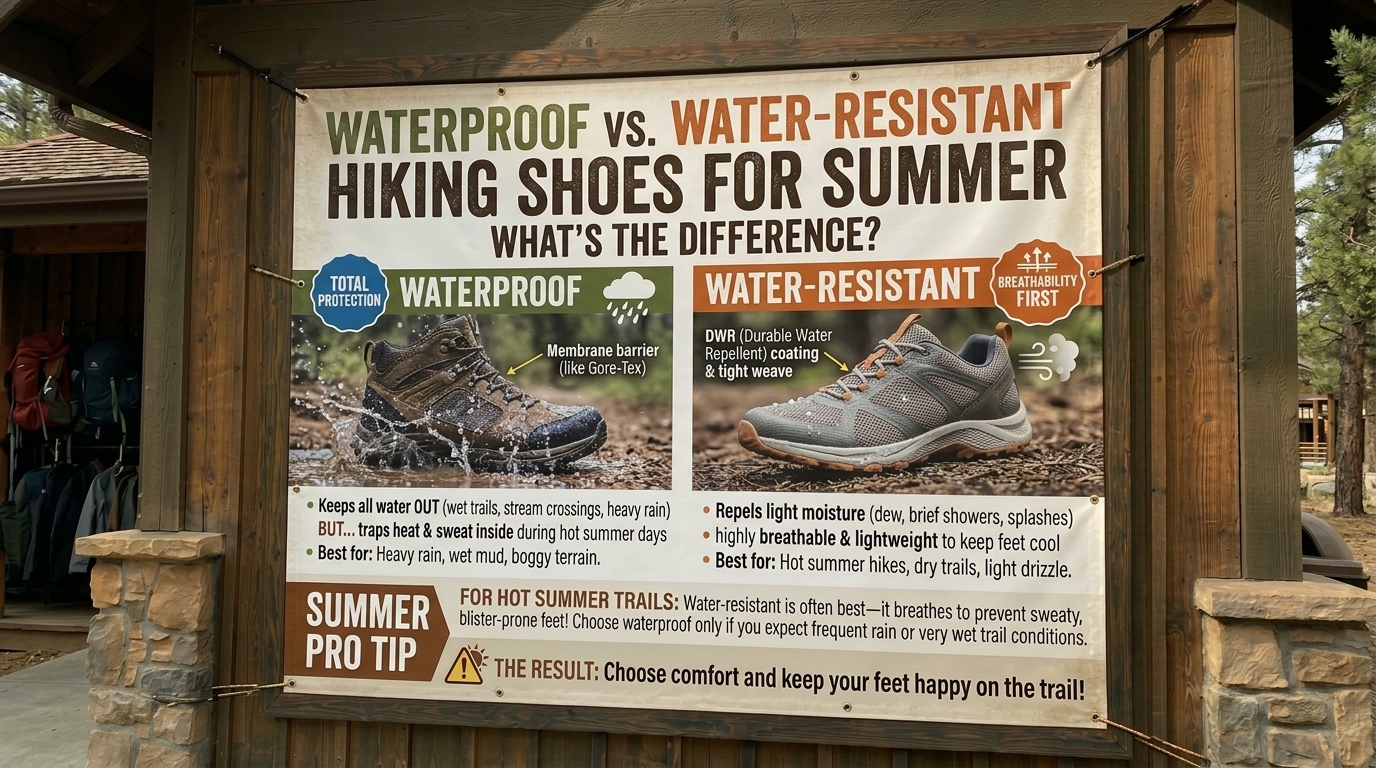
What Is the Difference Between Waterproof and Water-Resistant Hiking Shoes for Summer?
When summer arrives, hitting the trails becomes one of the ultimate outdoor pursuits. Whether you are scaling dry, dusty switchbacks in California, navigating coastal marine layers in San Francisco, traversing unpredictable microclimates in Washington, exploring rugged terrain in Texas, or escaping New York city life for weekend mountain getaways, choosing the right footwear can make or break your adventure.
One of the most common dilemmas hikers face when shopping for summer gear is deciding between waterproof and water-resistant (or non-waterproof, highly breathable) hiking shoes. At first glance, the terms sound interchangeable, but on a hot summer trail, the difference dictates whether your feet stay comfortably cool or turn into a sweltering swamp.
Defining the Terms: Waterproof vs. Water-Resistant
To choose the correct footwear for warm-weather hiking, you first need to understand how these shoes are constructed and what level of protection they actually offer.
1. Water-Resistant Hiking Shoes (The Breathable Choice)
Water-resistant hiking shoes—often encompassing lightweight mesh hikers and trail runners—are designed to manage light moisture, such as a brief morning dew on grass or a passing drizzle, while prioritizing maximum airflow.
- Construction: Built with open synthetic mesh uppers and treated with a Durable Water Repellent (DWR) coating on the outer surface. They do not contain an internal waterproof bootie or membrane.
- How They Handle Water: They repel light splashes and very brief moisture, but heavy rain or stepping into a deep puddle will cause water to soak through. However, because they lack an internal barrier, they dry out remarkably fast once wet.
2. Waterproof Hiking Shoes (The Shield)
Waterproof hiking shoes are engineered to create an impenetrable barrier between your feet and external moisture.
- Construction: Built with a specialized internal waterproof-breathable membrane (such as GORE-TEX, OutDry, or proprietary linings) coupled with gusseted tongues and sealed seams.
- How They Handle Water: They block out standing water, deep mud, heavy downpours, and stream crossings completely, keeping your feet bone-dry from the outside elements.
The Summer Dilemma: Why Waterproof Shoes Can Hurt in Hot Weather
While waterproof shoes sound superior on paper, summer introduces a major physiological challenge: heat and foot sweat.
Your feet contain more than 250,000 sweat glands and can produce up to half a pint of moisture per day during strenuous activity. In summer, temperature spikes compound this issue.
- The Trap of Reduced Breathability: Even the highest-end waterproof membranes sacrifice a degree of breathability compared to open mesh. In hot weather, body heat and sweat vapor struggle to escape through the waterproof layer fast enough. The result? Your sweat gets trapped inside the shoe, effectively creating a miniature sauna.
- The “Wet From the Inside” Paradox: Many hikers wearing waterproof boots in July heat discover their socks are soaking wet at the end of the day—not because rain leaked in, but because their own sweat couldn’t escape.
- The Slow Drying Trap: If you do manage to submerge a waterproof shoe over the ankle (or if heavy sweat saturates the interior), water gets trapped inside the membrane barrier. Waterproof shoes can take an entire day or longer to dry out in the backcountry.
Regional Summer Climates: Which Should You Wear?
Geographic location and trail conditions should heavily influence your choice of summer hiking footwear:
- Texas & Inland California: Characterized by dry, blistering heat, dusty trails, and intense sun. Water-resistant/breathable mesh shoes are the undisputed winner here. Waterproof boots will trap heat and cause excessive blistering from overheating.
- San Francisco & Coastal Washington: Summers feature cool coastal breezes, heavy morning fog, damp shaded forests, and occasional mud. If you are hiking through wet coastal brush or cold mud, waterproof footwear provides welcome protection.
- New York & Upstate Trails: Summer thunderstorms can trigger sudden downpours and muddy trails, but humidity is high. If trails are heavily wooded and wet, waterproof shoes work well, but for fast-paced dry day hikes, breathable water-resistant options keep feet cooler.
Pros and Cons Breakdown
| Feature | Water-Resistant / Breathable Shoes | Waterproof Hiking Shoes |
| Breathability | Extremely high; keeps feet cool in summer heat. | Lower; tends to trap heat and sweat in warm weather. |
| Weight | Typically lighter and more agile on feet. | Slightly heavier due to internal membranes and extra layers. |
| Drying Time | Dries rapidly if submerged or saturated with sweat. | Slow to dry if water breaches the collar or sweat builds up. |
| Protection | Repels light dew and dust; lets water through in heavy saturation. | Complete barrier against puddles, mud, streams, and heavy rain. |
| Best Used For | Hot, dry, dusty, or high-mileage summer trails. | Cold, wet, muddy, or alpine summer conditions. |
Frequently Asked Questions (FAQs)
1. Are waterproof hiking shoes too hot for summer hiking?
In most warm, dry summer climates, yes. Waterproof membranes restrict airflow, causing heat and sweat to build up, which increases the risk of chafing and blisters. They are best reserved for cool, wet, or high-altitude summer routes.
2. Can water-resistant shoes handle a sudden summer rainstorm?
They can handle light sprinkles or brief showers, but sustained downpours will eventually saturate the fabric. However, because they dry quickly, many hikers prefer them over waterproof boots that trap moisture long after the rain stops.
3. Do my feet get wet anyway in waterproof shoes during summer?
Often, yes. If temperatures are high, your own sweat can accumulate inside the shoe faster than the membrane can vent it out, leaving your socks damp from the inside.
4. Which option is better for preventing blisters in summer?
Breathability is the key to blister prevention in hot weather. Water-resistant mesh shoes keep feet cooler and drier from sweat, reducing skin maceration (softening of the skin due to moisture) that leads to painful blisters.
5. How do I maintain water-resistant shoes?
Clean off mud and dirt regularly with a soft brush and mild soap, and reapply a Durable Water Repellent (DWR) spray every few months to maintain the outer moisture-shedding coating.
6. Are waterproof shoes worth the extra money?
If you frequently hike in wet, boggy, or rainy environments, absolutely. However, if your summer hiking consists of dry dirt paths and sunny skies, investing in waterproof footwear means paying more for a feature you won’t benefit from.
7. Do waterproof membranes wear out over time?
Yes. Over months of heavy hiking, dirt, body oils, and flex friction can clog or degrade the microscopic pores of a waterproof membrane, reducing both its breathability and waterproof integrity.
8. What socks should I wear with summer hiking shoes?
Always pair your summer hiking shoes—whether waterproof or water-resistant—with synthetic or merino wool moisture-wicking socks. Avoid 100% cotton socks, which hold moisture against your skin and cause blisters.
9. Can I use waterproofing sprays to make mesh shoes waterproof?
No. Spraying a water-resistant mesh shoe with a DWR spray will make it shed light splashes better, but it cannot turn a porous mesh shoe into a fully waterproof barrier because it lacks an internal sealed membrane.
10. How do I dry out wet hiking shoes quickly on a summer trip?
Remove the insoles, loosen the laces, pull the tongue forward, and place the shoes in a warm, well-ventilated spot out of direct sunlight. Never use campfires, hair dryers, or direct heaters, as extreme heat warp plastics and melts glues.
Conclusion
When choosing between waterproof and water-resistant hiking shoes for summer, let your environment and comfort dictate your choice. If your summer treks involve dry dirt trails, high temperatures, and high mileage, water-resistant, highly breathable mesh shoes will keep your feet cool, light, and blister-free. However, if your summer adventures take you through sloppy alpine mud, freezing stream crossings, or persistent rain, waterproof footwear remains your best defense against wet misery. Match your gear to the climate, and enjoy every mile of the trail.
Leave a Reply