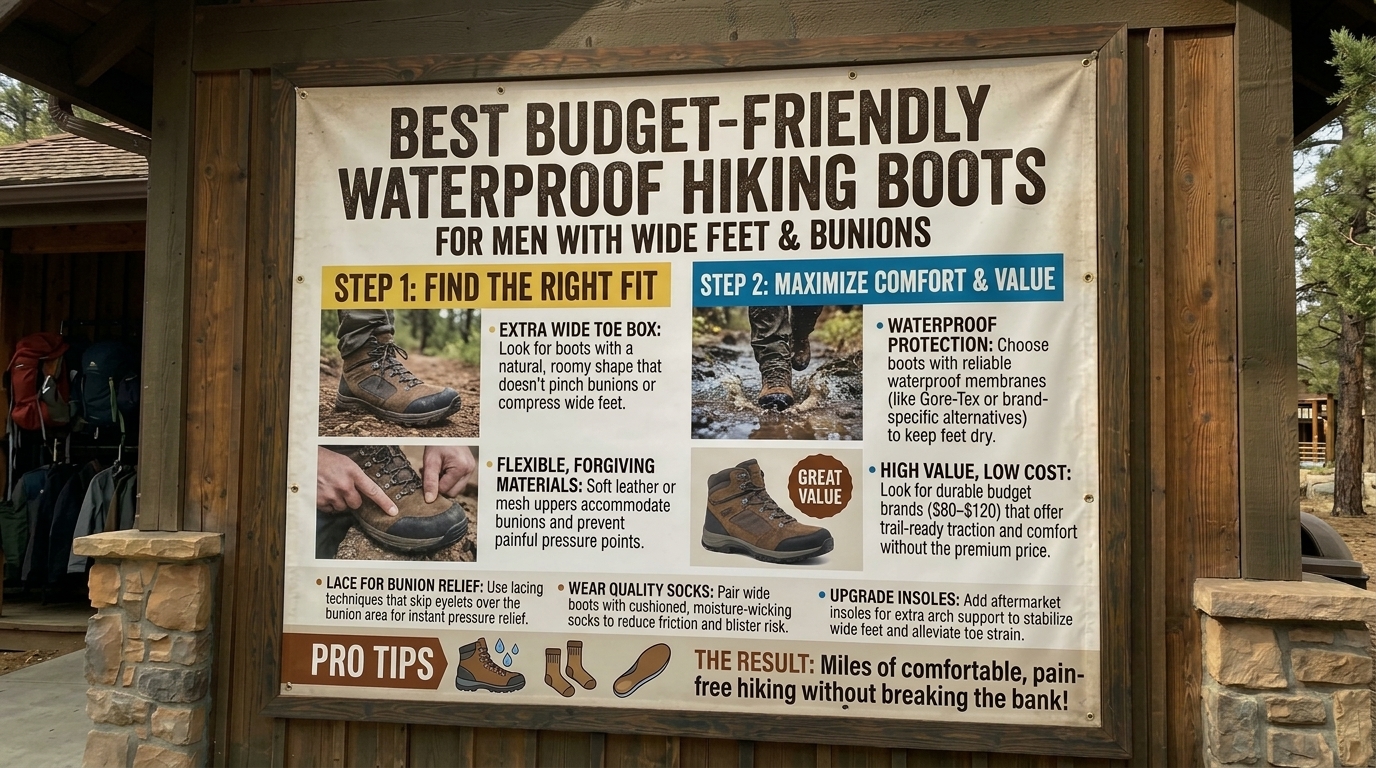
Hitting the trail should be an escape into nature, not an exercise in foot torture. However, if you have wide feet or suffer from bunions—a painful bony bump that forms on the joint at the base of your big toe—finding the right footwear can feel like an impossible quest. Standard hiking boots are notoriously narrow, pinching the forefoot, crushing sensitive joints, and turning a pleasant weekend hike into a blistering nightmare.
Add “waterproof” and “budget-friendly” to the checklist, and your options narrow down even further. Many entry-level boots sacrifice toe-box volume, while high-end orthopedic models can cost upwards of three hundred dollars.
Whether you are navigating muddy trails in Washington, handling coastal moisture in San Francisco or New York, or trekking through dry, rugged terrain in Texas and California, you deserve comfort without breaking the bank. This comprehensive guide explores the best budget-friendly, waterproof hiking boots tailored specifically for men with wide feet and bunions, alongside expert-backed selection tips.
Understanding the Challenge: Wide Feet, Bunions, and Waterproofing
Before diving into specific boot models, it is essential to understand why standard hiking boots fail men with bunions and wide forefeet.
A bunion (hallux valgus) alters the structural alignment of your foot, causing the big toe joint to push outward. When confined inside a narrow, tapered boot, this joint rubs constantly against the upper material. Friction creates inflammation, redness, corns, and excruciating pain.
What to Look For:
- Generous Toe Box: Unlike a pointed or tapered toe box, a wide or anatomically shaped (foot-shaped) toe box allows your toes to splay naturally, eliminating lateral pressure on bunions.
- True Wide Sizing Options: Look for brands that offer dedicated “Wide” (EE) or “Extra Wide” (EEEE) sizing rather than just sizing up in length (which causes heel slippage).
- Flexible Uppers: Supple leathers or high-grade synthetic mesh with minimal rigid overlays across the forefoot prevent painful rubbing.
- Reliable Waterproof Membranes: Budget-friendly doesn’t have to mean leaky. Look for integrated waterproof-breathable membranes that keep streams and rain out while letting sweat escape.
Top Budget-Friendly Waterproof Hiking Boots for Wide Feet & Bunions
To help you find the right pair, here are the top-performing, wallet-friendly waterproof hiking boots on the market that excel in accommodating wide forefeet and sensitive bunions.
1. Merrell Moab 3 Mid Waterproof
- Price Range: $140 – $160 (frequently on sale)
- Why It Works: Often called the “mother of all boots,” the Merrell Moab 3 is legendary for out-of-the-box comfort. Crucially, Merrell offers this boot in dedicated Wide widths. The Moab 3 features a contoured footbed, a supportive nylon arch shank, and a generous volume forefoot that accommodates mild-to-moderate bunions without pinching. The Gold-rated suede leather and mesh upper break in rapidly, while the waterproof membrane keeps your feet dry in sloppy conditions.
2. KEEN Targhee III (or Targhee IV) Waterproof Mid
- Price Range: $150 – $170
- Why It Works: KEEN is famous for its signature generous, wide toe boxes, making them a holy grail brand for hikers with bunions and wide feet. The Targhee series provides ample room up front so your toes and big toe joints can rest without compression. Built with waterproof leather and a breathable membrane, these boots feature robust rubber toe caps that protect against rocks while maintaining a flexible, non-binding midfoot fit.
3. Columbia Newton Ridge Plus Waterproof Amped
- Price Range: $90 – $120
- Why It Works: If you are shopping on a strict budget, Columbia offers one of the best value propositions in outdoor footwear. While standard widths can feel snug, the Wide versions of the Newton Ridge provide surprising volumetric space in the toe box. Featuring lightweight techlite midsoles and seam-sealed waterproof construction, these boots offer solid performance for day hikes across Texas and California without draining your wallet.
4. Timberland White Ledge Mid Waterproof
- Price Range: $100 – $130
- Why It Works: A classic entry-level boot, the Timberland White Ledge is widely available in dedicated wide sizes. Crafted from full-grain waterproof leather, it features a gusseted tongue and a cushioned EVA footbed. While it requires a slightly longer break-in period than mesh-heavy boots, the all-leather upper molds to the shape of your foot over time, custom-fitting around troublesome bunions.
Essential Tips for Buying and Fitting Wide Bunion Boots
Finding the right boot model is only half the battle; how you fit and prep them dictates your comfort on the trail.
- Shop Later in the Day: Always try on or buy hiking boots in the afternoon or evening when your feet are naturally swollen to their maximum size.
- Wear Your Hiking Socks: Test potential boots wearing the exact cushioned, moisture-wicking socks you plan to use on the trail.
- Consider Custom Insoles: If budget permits, pairing a budget boot with an orthotic insole or a metatarsal pad can drastically relieve pressure off the ball of the foot and bunion joint.
- Use a Boot Stretcher: If a synthetic or leather boot fits great everywhere except a slight pinch over your bunion, a localized wooden boot stretcher with a bunion plug can stretch that exact spot by a few millimeters.
Frequently Asked Questions (FAQs)
1. Should I buy a size larger to accommodate my bunions?
Sizing up in length is generally a bad idea because it shifts your heel out of the heel pocket, causing painful blisters and instability. Instead, buy your true length in a dedicated Wide (EE) width or choose a brand naturally known for a roomy toe box like KEEN.
2. Are leather or synthetic hiking boots better for bunions?
Both have merits. Soft synthetic mesh boots offer instant flexibility with zero break-in time, making them gentle on bunions immediately. However, quality full-grain or suede leathers stretch and mold to the exact contours of your foot over time, providing a personalized pain-free fit.
3. How do I know if a hiking boot is truly wide enough?
When laced up, your toes should be able to wiggle freely side-to-side, and the sides of your feet (especially the big toe joint) should not press heavily against the inner walls of the boot. If the upper material bulges past the midsole outsole platform, the boot is too narrow.
4. Can waterproofing sprays help loosen tight boots?
No. Waterproofing sprays create a protective barrier against moisture; they do not alter or stretch the structural material of the boot. Use a dedicated leather or synthetic boot-stretching liquid if you need to gently expand tight spots.
5. Are budget hiking boots durable enough for rocky terrain?
Yes, many budget-friendly options under $150 (such as the Merrell Moab or Columbia Newton Ridge) use durable rubber outsoles and reinforced stitching designed to handle hundreds of miles of moderate backpacking and day hiking.
6. Do bunions require specialized orthopedic hiking boots?
Not always. While specialized medical boots exist, many hikers with mild-to-moderate bunions find complete relief simply by switching to footwear with a wide toe box, low-drop design, and dedicated wide sizing.
7. Why do my feet hurt worse in waterproof boots than non-waterproof ones?
Waterproof membranes (like Gore-Tex or proprietary liners) slightly reduce the breathability of a boot and can make the upper feel marginally stiffer. Ensuring you wear moisture-wicking merino wool socks helps mitigate heat buildup and friction.
8. How can I prevent blisters over my bunions on long hikes?
Apply a strip of moleskin, sports tape, or anti-blister balm directly to your bunion before putting on your socks. This creates a friction-free barrier that prevents hot spots from turning into painful open blisters.
9. Can I stretch out a waterproof membrane without ruining it?
Yes, gentle mechanical stretching using a boot stretcher or professional cobbler tools will not compromise most waterproof membranes, provided heat is never applied to force the stretch.
10. What is the best way to break in wide hiking boots safely?
Wear your new boots around the house for a few hours a day, progress to short neighborhood walks, and gradually work your way up to longer day hikes before taking them on a multi-day backpacking trip.
Conclusion
Living with wide feet and bunions shouldn’t prevent you from exploring the great outdoors. By prioritizing boots with generous toe boxes, dedicated wide widths, and reliable waterproof protection—such as the Merrell Moab 3 Wide or KEEN Targhee series—you can secure all-day comfort without emptying your bank account. Take your time selecting the right fit, prep your feet properly, and hit the trail with confidence, knowing your feet are supported every step of the way.
Leave a Reply