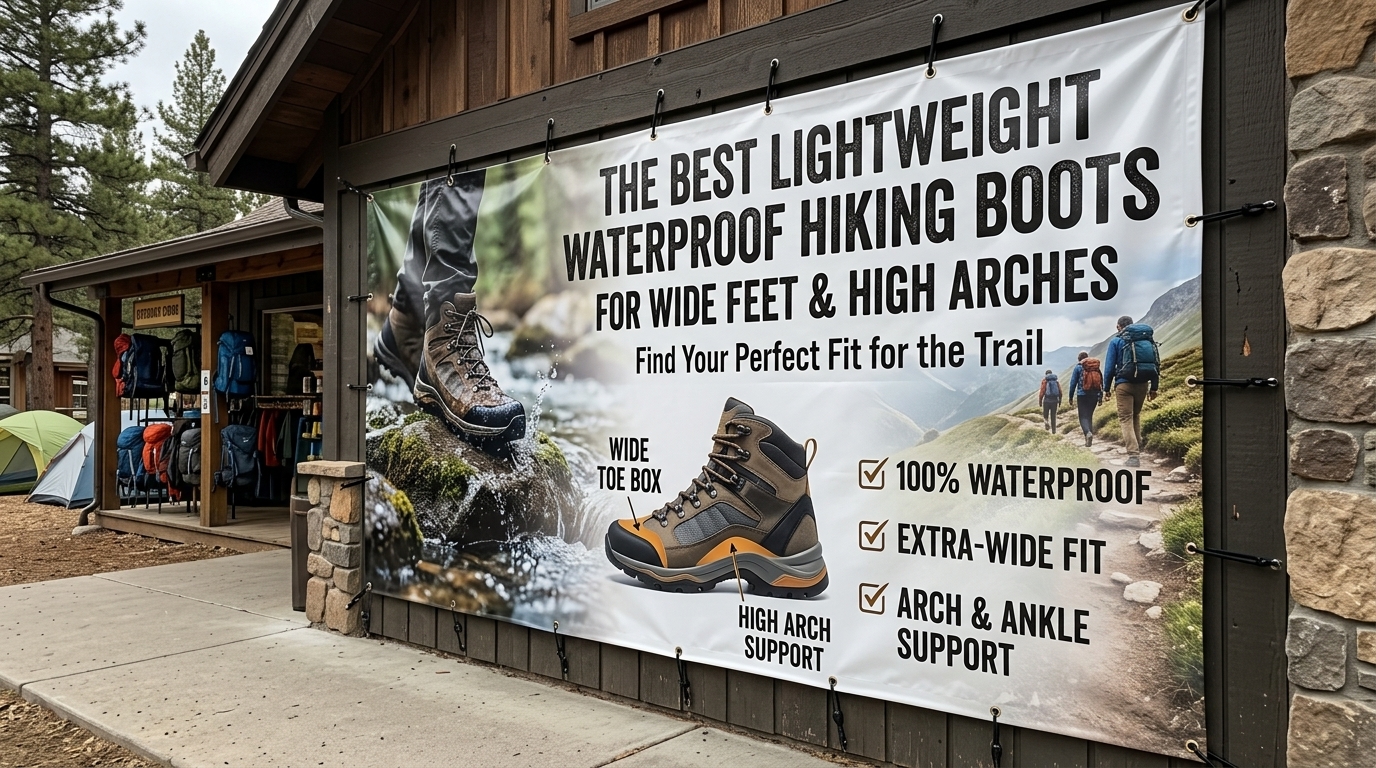
Finding the right pair of hiking boots can feel like searching for a needle in a haystack—especially if your feet demand specific accommodations. Traditional hiking boots are notoriously narrow, flat-bottomed, and stiff. If you have wide feet combined with high arches, hitting the trails can quickly turn into an agonizing experience filled with hot spots, numbness, blisters, and arch strain.
Fortunately, gear technology has evolved dramatically. Modern outdoor brands have mastered the art of combining featherlight construction, reliable waterproof membranes, high-volume toe boxes, and structural arch support.
Understanding the Anatomy of Wide Feet and High Arches
Before diving into the top gear recommendations, it is vital to understand why standard hiking boots fail you.
- The Wide Forefoot Problem: Many standard boots taper aggressively toward the toes, squishing your metatarsals together. Over long miles, this causes nerve compression (such as Morton’s neuroma) and painful blisters.
- The High Arch Dilemma: High arches (pes cavus) mean your feet do not naturally absorb shock efficiently. They require either a boot with substantial built-in structural arch contour or enough internal volume to accommodate specialized orthotic insoles without squeezing the top of your foot against the boot ceiling.
When you blend these two traits, you need a boot that offers high instep volume (vertical space) alongside a wide toe box (horizontal space), paired with a lightweight, waterproof build.
Top Lightweight Waterproof Hiking Boots for Wide Feet & High Arches
1. KEEN Targhee IV Waterproof Mid
- Best For: Overall comfort, extra-wide toe boxes, and high-volume insteps.
- Weight: Moderate-Light
- Waterproofing: KEEN.DRY breathable membrane
The KEEN Targhee series has long been a holy grail for hikers with wide feet, and the Targhee IV elevates this legacy. Known for its iconic stubby, foot-shaped toe box, it allows your toes to splay out naturally.
- Why it works for high arches: The boot features a removable, dual-density EVA footbed with decent arch contour. Because the instep has generous vertical volume, you can easily slip in custom orthotics if your high arches require rigid medical-grade support.
- Performance: Features reliable waterproofing and a durable, glue-free outsole bonding process that prevents the dreaded sole-separation common in older boots.
2. Altra Olympus 6 Hike Mid GTX
- Best For: Zero-drop cushioning and maximum toe splay.
- Weight: Lightweight
- Waterproofing: GORE-TEX
Altra is famous for its FootShape™ toe box, which mimics the natural shape of human feet. The Olympus 6 Hike Mid GTX takes that wide platform and injects a massive dose of plush, premium cushioning underfoot.
- Why it works for high arches: While Altra is known for “zero-drop” (even heel and toe height), the sheer thickness of the midsole foam acts like a giant cushion against the impact forces high-arch feet struggle to absorb. The upper wraps securely over the midfoot, locking your heel in place while giving your forefoot total freedom.
- Performance: Equipped with a GORE-TEX waterproof membrane and a Vibram® Megagrip outsole, it offers exceptional traction on wet, slippery rocks.
3. Topo Athletic Trailventure 2 WP
- Best For: Fastpackers and nimble day-hiking.
- Weight: Featherlight
- Waterproofing: eVent® waterproof bootie
Topo Athletic bridges the gap between running shoe comfort and hiking boot stability. The Trailventure 2 WP features a snug, locked-in heel and midfoot combined with a wonderfully generous, wide toe box.
- Why it works for high arches: Topo’s OrthoLite® custom footbeds provide wonderful step-in comfort and target arch support right out of the box. The shoe’s flexible upper accommodates high insteps seamlessly without creating pressure points across the top of the foot.
- Performance: Utilizing an eVent waterproof lining, it breathes exceptionally well, preventing your feet from overheating during strenuous climbs.
4. Merrell Moab 3 Mid Waterproof (Wide Width Option)
- Best For: Budget-conscious hikers seeking out-of-the-box comfort.
- Weight: Lightweight to Moderate
- Waterproofing: Merrell Dry Waterproof Membrane
Dubbed the world’s best-selling hiking boot for a reason, the Merrell Moab 3 comes in dedicated Wide sizes.
- Why it works for high arches: Merrell integrates a molded nylon arch shank into the midsole alongside a Super Rebound Compound foam that absorbs shock and actively supports high arches. The generous instep volume accommodates thicker socks and structured inserts effortlessly.
- Performance: Virtually zero break-in period. It features a gold-rated suede leather and mesh upper that balances durability with breathability.
Essential Tips for Fitting Wide Feet and High Arches
Buying the right boot is only half the battle. How you prep and lace your boots dictates your trail comfort.
- Size Up Appropriately: Never squeeze into your standard street shoe size. Go up a half-size to accommodate foot swelling and thick hiking socks on long descents.
- Adopt the “Window Lacing” Technique: If the top of your boot presses painfully against your high arch, try window lacing (or parallel lacing). Cross the laces over the bottom hooks, skip a set of hooks directly over the highest point of your arch, and resume crossing higher up. This relieves direct pressure while maintaining lateral stability.
- Invest in Aftermarket Insoles: Factory insoles are notoriously flat. Pairing a wide-toe-box boot with a specialized high-arch support insole (such as Superfeet or Powerstep) transforms a mediocre fit into a custom orthopedic feel.
- Test with Your Hiking Socks: Always try on boots later in the day when your feet are slightly swollen, wearing the exact socks you plan to hit the trail with.
10 Frequently Asked Questions (FAQs)
1. Are wide-width hiking boots necessary, or can I just size up in a regular boot?
Sizing up in a regular boot lengthens the shoe rather than widening it. This causes your foot to slide forward on downhills, jamming your toes into the front. If you have genuinely wide feet, always look for brands with natural wide toe boxes or dedicated “Wide” (EE) sizing options.
2. How do high arches affect hiking boot selection?
High arches do not distribute shock evenly, putting extra stress on your heels and forefeet. You need boots with deep heel cups, strong midsole cushioning, and adequate internal volume to support custom orthotics or structured insoles.
3. Do waterproof boots make wide feet sweat more?
Waterproof membranes (like GORE-TEX or eVent) trap some heat. Because wide feet already have more surface area enclosed in a boot, look for models that pair waterproofing with breathable mesh uppers to mitigate excessive sweating.
4. Can I wear custom orthotics in lightweight hiking boots?
Yes, but you must ensure the boot has a removable factory insole and enough vertical instep volume. Lightweight boots with flexible uppers (like the KEEN Targhee or Altra Olympus) are much more forgiving with orthotics than stiff, rigid leather mountaineering boots.
5. Which brands naturally run the widest?
US-based brands like Altra, KEEN, Topo Athletic, and Merrell generally offer the most generous out-of-the-box width and volume. European brands (like La Sportiva or Asolo) typically feature narrower, more technical European lasts.
6. How often should I replace waterproof hiking boots?
On average, lightweight hiking boots last between 300 to 500 miles. Once the midsole foam compresses and loses its shock absorption—or the waterproof membrane cracks along the flex creases—it is time for a new pair.
7. Are zero-drop boots good for high arches?
Zero-drop boots (like Altra) encourage a natural midfoot/forefoot strike. While they lack a raised heel, thick-cushioned zero-drop models provide ample protection, though hikers with severe rigid high arches may need to add an arch-supporting orthotic.
8. How do I prevent heel slippage in a wide boot?
Heel slippage happens when a boot is wide enough for your forefoot but too loose in the heel cup. Combat this using a “runner’s knot” (heel lock lacing) at the top ankle eyelets to anchor your heel securely back into the pocket.
9. Can I hike in waterproof trail running shoes instead of boots?
Absolutely. Many backpackers with wide feet prefer waterproof trail runners (like the Altra Lone Peak All-Weather series) because they offer ultimate flexibility, lighter weights, and zero ankle restriction.
10. What is the single best maintenance tip for waterproof wide boots?
Clean off mud and dirt regularly with lukewarm water and a soft brush. Mud dries out the upper materials and clogs the breathable pores of waterproof membranes, causing premature leaks. Apply a specialized DWR (Durable Water Repellent) spray periodically.
Conclusion
Conquering the trails with wide feet and high arches no longer means resigning yourself to blisters and foot fatigue. By prioritizing footwear with generous forefoot volume, high insteps, and shock-absorbing midsoles—such as the KEEN Targhee IV, Altra Olympus 6 Hike Mid GTX, or Merrell Moab 3 Wide—you unlock total trail comfort. Combine your chosen boots with proper lacing techniques and supportive insoles, and you will be ready to tackle any terrain pain-free.
Best Hiking Boots for Wide Feet 2026 – Watch Before You Buy!
This video provides a visual breakdown of top-performing wide hiking boots and how their toe boxes accommodate broader feet on the trail.
Leave a Reply