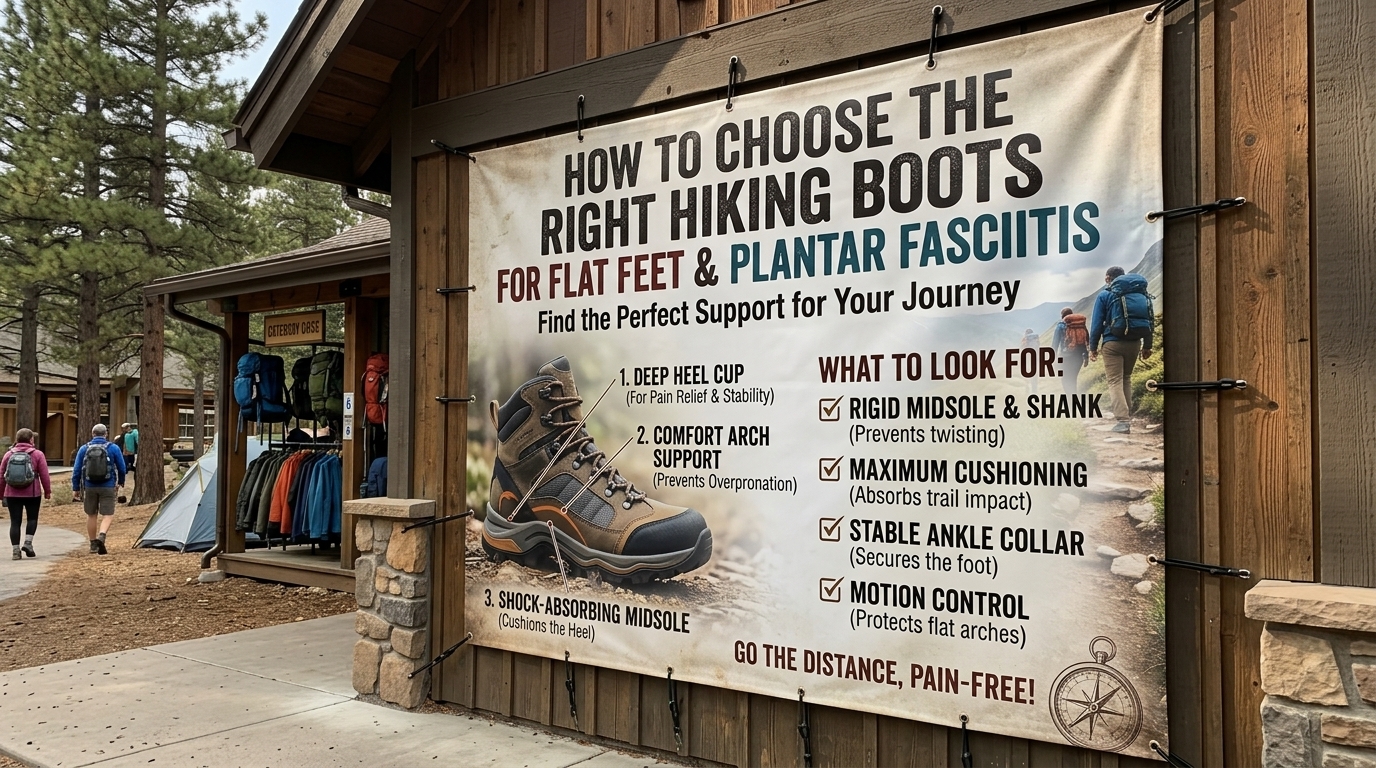
Hitting the hiking trails should feel like an escape, a breath of fresh air, and an invigorating physical challenge. However, if you live with flat feet (pes planus) or plantar fasciitis, a simple weekend hike can quickly transform into an agonizing test of endurance. Sharp stabbing pains in your heels, arch fatigue, and widespread lower limb soreness can ruin your outdoor experience before you even reach the summit.
Traditional hiking boots are frequently designed with stiff, unyielding soles and virtually zero built-in arch contours. For hikers with flat feet—whose arches collapse inward upon impact (overpronation)—standard footwear places immense, unnatural strain on the plantar fascia ligament.
To hike comfortably and pain-free, you need to understand how to select boots that offer structural stability, targeted arch support, robust shock absorption, and a reliable waterproof build.
The Mechanics: How Flat Feet and Plantar Fasciitis Impact Hiking
To choose the right footwear, it helps to understand what is happening beneath your feet on the trail.
- The Reality of Flat Feet: When you have flat feet, your arches flatten completely or partially against the ground. This often leads to overpronation, where your ankles roll inward with every step. This unnatural gait misaligns your entire lower kinetic chain, placing extra stress on your ankles, knees, and lower back.
- The Plantar Fasciitis Connection: The plantar fascia is a thick band of tissue running across the bottom of your foot, connecting your heel bone to your toes. When your arches collapse repeatedly without adequate support, this ligament stretches excessively, micro-tears, and becomes inflamed—resulting in the sharp, burning heel pain characteristic of plantar fasciitis.
- Why Hiking Magnifies the Pain: Uneven terrain, rocky paths, and the added weight of a daypack amplify the impact forces on your feet. Without a supportive platform, your feet have to work twice as hard to stabilize your stride.
5 Essential Features to Look For in Hiking Boots
When shopping for hiking boots tailored to flat feet and plantar fasciitis, do not settle for generic comfort. Look for these non-negotiable structural elements:
1. Rigid or Semi-Rigid Heel Counters and Torsional Stability
Flat feet need external structural integrity to stop the foot from rolling inward. Look for boots with a stiff heel counter (the cup at the back of the boot that holds your heel) and high torsional rigidity (meaning the boot resists twisting excessively from side to side). This prevents your foot from collapsing on uneven dirt and rocks.
2. Substantial Arch Support and Deep Heel Cups
A flat foot needs a boot that fills the void under the arch. While many factory insoles are entirely flat, look for models featuring anatomical contours or removable footbeds that allow you to swap in medical-grade orthotics. Deep heel cups also help cradle the fat pad of your heel, reducing pressure on the inflamed plantar fascia origin.
3. Generous Midsole Cushioning (Shock Absorption)
Every time your foot strikes a hard rock or root, shock waves travel up through your heel. Premium midsole materials—such as high-density EVA foam or specialized polyurethane compounds—absorb these impact forces before they aggravate your plantar fascia.
4. Weatherproof Protection (Waterproofing)
Wet feet lead to skin softening, friction, and blisters—complications you cannot afford when managing chronic foot pain. Look for trusted waterproof membranes (like GORE-TEX, eVent, or proprietary sealed linings) that block out puddles and stream crossings while still letting sweat vapor escape.
5. Roomy Toe Box and Proper Volume
Flat feet often spread out and widen under pressure, and many hikers with flat feet also deal with bunions or swollen feet over long distances. Ensure the boot offers enough internal volume so your toes aren’t crammed together, which causes secondary nerve and tendon strain.
Top-Rated Hiking Boots for Flat Feet and Plantar Fasciitis
Based on rigorous field testing and podiatric principles, several models stand out for hikers needing serious arch protection and stability:
- Merrell Moab 3 Mid Waterproof: Widely praised as a best-all-around choice, it features a molded nylon arch shank, robust heel stability, and a supportive footbed that handles flat feet exceptionally well.
- HOKA Kaha 3 GTX: A phenomenal choice if maximum shock absorption is your top priority. Its oversized plush midsole acts like a cushion against harsh trail impacts, soothing tired arches.
- LOWA Renegade EVO GTX Mid: A classic leather powerhouse that offers stellar lateral support, a structured PU midsole, and incredible durability to keep overpronation at bay.
- Salomon Quest 5 GTX: Perfect for backpackers needing unyielding ankle support and a rigid platform to keep the foot stable under heavy loads.
Practical Tips for Managing Plantar Fasciitis on the Trail
- Invest in Custom or Medical-Grade Orthotics: If a boot’s factory insert feels too flat, pull it out and replace it with specialized arch-supporting insoles (such as Superfeet Green or custom orthotics prescribed by your podiatrist).
- Perform Pre-Hike Stretches: Never skip your calf and plantar fascia stretches before stepping onto the trail. Loosening your calves directly relieves tension on the heel cord and fascia.
- Gradual Mileage Increases: Don’t jump straight into a 10-mile rugged mountain trek if your feet aren’t conditioned. Build your trail distance up gradually.
- Ice and Roll Post-Hike: When you finish your hike, roll your foot over a frozen water bottle or specialized massage ball to calm inflammation in the plantar fascia.
10 Frequently Asked Questions (FAQs)
1. Can hiking boots completely cure plantar fasciitis?
Hiking boots alone cannot cure plantar fasciitis, but wearing supportive boots with proper arch control and cushioning is critical to preventing flare-ups and allowing the inflamed tissue to heal while you stay active.
2. Should I buy a stiffer or more flexible hiking boot for flat feet?
You generally want a boot with moderate to high torsional stiffness and a firm midsole. Excessively flexible, bendy shoes allow your arch to collapse entirely, worsening overpronation and strain.
3. Are waterproof hiking boots necessary for flat feet?
Waterproofing doesn’t directly change arch support, but keeping your feet dry prevents skin breakdown and blisters, which compound foot discomfort on long, wet treks.
4. Can I use custom orthotic inserts inside waterproof hiking boots?
Yes. In fact, many hikers with severe flat feet rely on custom orthotics. Just ensure you remove the factory insole first and choose a boot with enough internal volume to accommodate the extra depth.
5. Are zero-drop shoes or boots safe for plantar fasciitis?
Zero-drop footwear (shoes with equal heel and toe height) can place extra stretch on the Achilles tendon and calf muscles, which can aggravate plantar fasciitis for individuals accustomed to traditional heel drops. Proceed with caution and transition slowly.
6. How do I know if my hiking boots have enough arch support?
If you slip your hand inside the boot and feel a completely flat floor with no upward contour under your arch—or if your foot aches along the inner midfoot after 15 minutes of walking—the built-in support is insufficient.
7. Does body weight affect which hiking boots I should buy for flat feet?
Yes. Heavier hikers or those carrying multi-day backpacking packs put significantly more downward pressure on their arches, requiring stiffer shanks, firmer midsoles, and higher shock absorption ratings.
8. How often should I replace my hiking boots if I have flat feet?
Midsoles compress over time, losing their shock-absorbing capabilities and arch-support integrity. For regular hikers, supportive boots typically need replacement every 300 to 500 miles.
9. Can I wear trail running shoes instead of boots if I have flat feet?
Many hikers with flat feet successfully use structured stability trail runners. However, if you carry a heavy pack or require strict ankle and midfoot rigidity, a mid-cut hiking boot is usually safer.
10. What is the best immediate remedy if my plantar fasciitis flares up mid-hike?
Take a short break, loosen your laces slightly over your instep to relieve pressure, stretch your calf muscles against a tree or rock, and consider using trekking poles to reduce downward load on your lower limbs.
Conclusion
Living with flat feet and plantar fasciitis doesn’t mean you have to hang up your hiking boots. By prioritizing footwear engineered with rigid heel counters, structured arch support, and impact-absorbing midsoles—such as the Merrell Moab 3 Mid, HOKA Kaha 3, or LOWA Renegade—you can protect your feet from unnecessary strain. Pair your boots with custom orthotics, smart stretching routines, and proper pacing, and you will be ready to conquer any trail in absolute comfort.
Watch: Best Footwear Adjustments for Flat Feet & Plantar Fasciitis
Leave a Reply