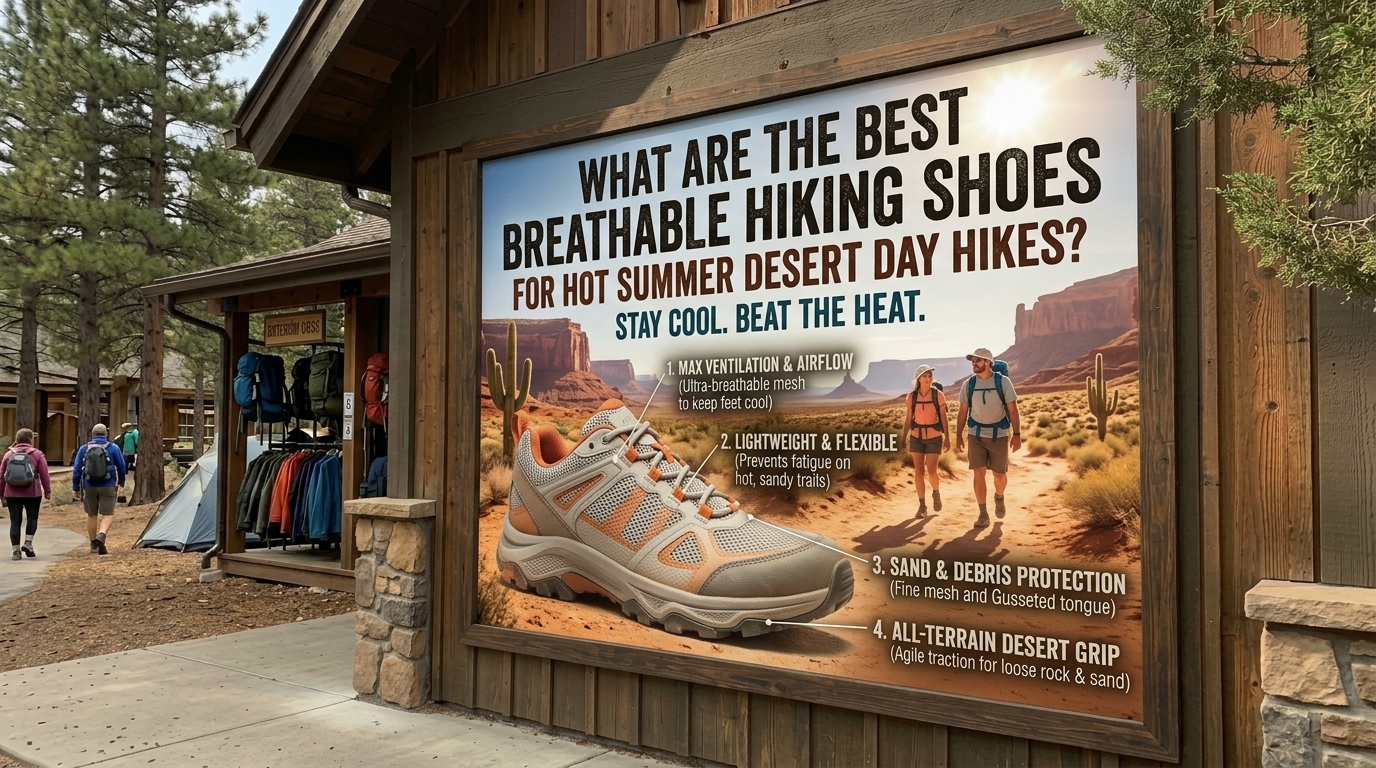
Hiking in the desert during the searing heat of a summer day is an unforgettable experience. The vast, sweeping landscapes, striking geological formations, and profound solitude are unmatched. However, desert environments are notoriously unforgiving. When ambient air temperatures soar past 100°F (38°C) and surface sand temperatures reach blistering extremes, your feet become your most vulnerable asset.
Choosing standard waterproof hiking boots for a desert hike is one of the biggest mistakes a backpacker can make. In dry, arid heat, waterproof membranes trap body heat and sweat inside the shoe, turning your footwear into a literal miniature sauna. This excess moisture softens the skin, resulting in severe friction, painful blisters, and potential heat rash.
For hot summer desert day hikes, you need footwear engineered specifically for maximum breathability, featherlight agility, open mesh ventilation, and abrasive sand protection.
The Desert Footwear Philosophy: Breathability Over Waterproofing
When venturing into arid regions like the Mojave, Sonoran, or Chihuahuan deserts, your primary enemy isn’t water from the outside—it’s sweat from the inside.
- The Vapor Escape Route: High-performance desert hiking shoes utilize ultra-porous open-knit mesh uppers that allow sweat vapor to evaporate almost instantly. This continuous airflow keeps your core foot temperature regulated and dry.
- The Sand Dilemma: Desert sand is fine, abrasive, and relentless. While ultra-mesh shoes breathe wonderfully, they can let fine dust grains in. Pairing your breathable desert shoes with low, lightweight trail gaiters creates an impenetrable seal that keeps sand out while letting heat escape.
- Sole Protection on Superheated Ground: Desert surfaces absorb solar radiation intensely. You need a shoe with a sturdy, heat-resistant rubber outsole and a protective rock plate to prevent burning your soles on searing rocks.
Top Breathable Hiking Shoes and Trail Runners for Desert Day Hikes
Based on rigorous field testing in extreme heat, abrasive sand conditions, and rocky arroyos, these models stand out as the absolute best for desert environments.
1. Altra Lone Peak All-Weather Low (Non-GORE-TEX / Mesh Versions) or Lone Peak 8
- Best For: Natural toe splay, zero-drop comfort, and maximum forefoot airflow.
- Weight: Featherlight (approx. 21 oz / pair)
- Design Focus: Ultra-wide toe box allowing toes to spread naturally when feet swell in extreme heat.
The Altra Lone Peak series is legendary among desert thru-hikers tackling paths like the Arizona Trail.
- Why it shines in the desert: The standard mesh versions of the Lone Peak feature a highly permeable upper that dumps heat instantly. The Altra FootShape™ toe box gives your toes room to breathe, drastically reducing friction-based blisters caused by heat expansion.
- Outsole Performance: MaxTrac™ rubber outsoles with multi-directional lug patterns grip slick slickrock, sandstone, and loose gravel effortlessly.
2. Salomon X Ultra 4 (Non-Waterproof Mesh Version)
- Best For: Lateral stability, precision fit, and technical rocky terrain.
- Weight: Lightweight (approx. 26 oz / pair)
- Design Focus: Advanced Chassis™ stability technology wrapping the foot securely.
While Salomon offers waterproof Gore-Tex variants, their non-waterproof mesh editions are absolute champions for hot, dry climates.
- Why it shines in the desert: The open 3D mesh upper maximizes ventilation while preventing larger pebbles from entering. The Quicklace™ system allows for fast, one-pull adjustments if your feet swell during midday temperature spikes.
- Outsole Performance: Contagrip® MA rubber grips both wet and dry surfaces, giving you immense confidence when scrambling up steep sandstone canyons.
3. HOKA Speedgoat 5 (Non-Waterproof)
- Best For: Plush shock absorption and long-mileage joint protection on hard-packed dirt.
- Weight: Lightweight max-cushion (approx. 24 oz / pair)
- Design Focus: Thick CMEVA midsole foam shielding feet from hot, rocky ground.
The HOKA Speedgoat 5 is engineered for punishing terrain, making it an exceptional choice for desert trails littered with sharp rocks and cacti debris.
- Why it shines in the desert: The elevated stack height places more physical distance between your feet and the baking desert floor, significantly reducing conductive heat transfer. The breathable double-layer jacquard mesh upper maintains steady airflow.
- Outsole Performance: Vibram® Megagrip with Traction Lugs bites securely into loose desert sand and sliding shale.
4. Brooks Cascadia 17 (Non-Waterproof)
- Best For: Balanced cushioning, structural protection, and rugged trail durability.
- Weight: Lightweight (approx. 28 oz / pair)
- Design Focus: Ballistic rock shield protecting the forefoot from sharp desert thorns and rocks.
The Brooks Cascadia has a legendary heritage in trail running and hiking, and the non-waterproof iteration is exceptionally well-suited for arid environments.
- Why it shines in the desert: It features a specialized internal rock plate that acts as a shield against sharp stones and cholla cactus needles. The breathable mono-mesh upper promotes rapid drying and heat dissipation.
- Outsole Performance: TrailTack green rubber outsole delivers dependable traction across dry washes and rocky ridges.
Essential Tips for Desert Hiking Footwear and Comfort
- Pair with Low Trail Gaiters: Because highly breathable shoes feature porous mesh, fine desert sand will inevitably try to sneak inside. Wearing lightweight running gaiters (like Dirty Girl Gaiters) secured over your laces blocks sand completely.
- Choose Merino Wool or Synthetic Socks: Never wear 100% cotton socks in the desert. Cotton retains sweat, creating damp friction zones that shred skin. Opt for thin, moisture-wicking merino wool or synthetic socks.
- Pack Electrolytes and Protect Your Skin: Desert heat causes rapid dehydration. Ensure your hydration strategy matches the ambient temperature, and consider wearing lightweight sunhoodies and UV-protective leg sleeves.
10 Frequently Asked Questions (FAQs)
1. Should I wear waterproof shoes for desert day hikes?
No. Waterproof shoes trap sweat and internal body heat, creating a humid microclimate that leads to severe blistering in hot desert climates. Always choose breathable, non-waterproof mesh shoes or trail runners.
2. How do I keep sand out of my low breathable hiking shoes?
The best method is wearing low-profile trail gaiters. They attach to the back of your shoe and hook onto your laces, creating a physical barrier that prevents sand, pebbles, and grit from falling inside.
3. Are trail running shoes better than hiking boots for desert hiking?
Yes. Most experienced desert hikers prefer lightweight breathable trail running shoes over stiff boots because they dry instantly, weigh a fraction of the amount, and allow superior airflow to prevent overheating.
4. Do dark-colored shoes absorb more heat in the desert?
Yes. Dark colors (like black, navy, or dark gray) absorb solar radiation much faster than light colors (like tan, beige, grey, or white). Choosing light-colored footwear helps keep your feet noticeably cooler under direct sunlight.
5. How do I prevent my feet from swelling in extreme desert heat?
Heat causes blood vessels to dilate, leading to foot swelling. To combat this, choose shoes with a wide toe box (like Altra), loosen your laces slightly during midday heat peaks, and rest in the shade during peak solar hours.
6. Can cactus needles pierce through breathable mesh hiking shoes?
Yes, certain sharp desert flora (like prickly pear spines or cholla needles) can pierce soft mesh. To minimize risk, stick strictly to established trails, avoid brushing against off-trail brush, and wear shoes with integrated rock plates or overlays.
7. How long do breathable mesh trail shoes last in abrasive desert environments?
Desert sand acts like liquid sandpaper against fabric stitching. Lightweight mesh shoes typically last between 350 to 500 miles in rocky, sandy terrain before the upper mesh begins wearing thin or tearing at high-flex points.
8. What is the best sock material for hot desert day hikes?
Thin, lightweight Merino wool or high-performance synthetic blends (like polyester/nylon) are ideal. They pull moisture away from your skin instantly and dry rapidly if you sweat heavily.
9. Should I size up when buying desert hiking shoes?
Yes. Because your feet swell significantly in hot weather, purchasing your desert hiking shoes a half-size larger than your normal street shoes prevents your toes from slamming into the front during steep descents.
10. How should I clean fine desert dust out of my shoes after a hike?
After every desert hike, remove your insoles, shake out accumulated sand, and brush down the mesh uppers with a dry or slightly damp soft-bristled brush. Avoid storing dirty, sandy shoes in sealed plastic bags, as trapped organic dust can degrade fabric fibers.
Conclusion
Tackling hot summer desert day hikes requires specialized gear designed to combat extreme heat, intense solar radiation, and fine abrasive sand. By prioritizing maximum breathability, wide toe boxes, heat-reflective colorways, and robust outsoles—such as the Altra Lone Peak, Salomon X Ultra 4 Mesh, or HOKA Speedgoat 5—you protect your feet from overheating and blistering. Pair your breathable shoes with low trail gaiters and moisture-wicking socks, and you will be ready to explore magnificent desert landscapes safely and comfortably.
Leave a Reply