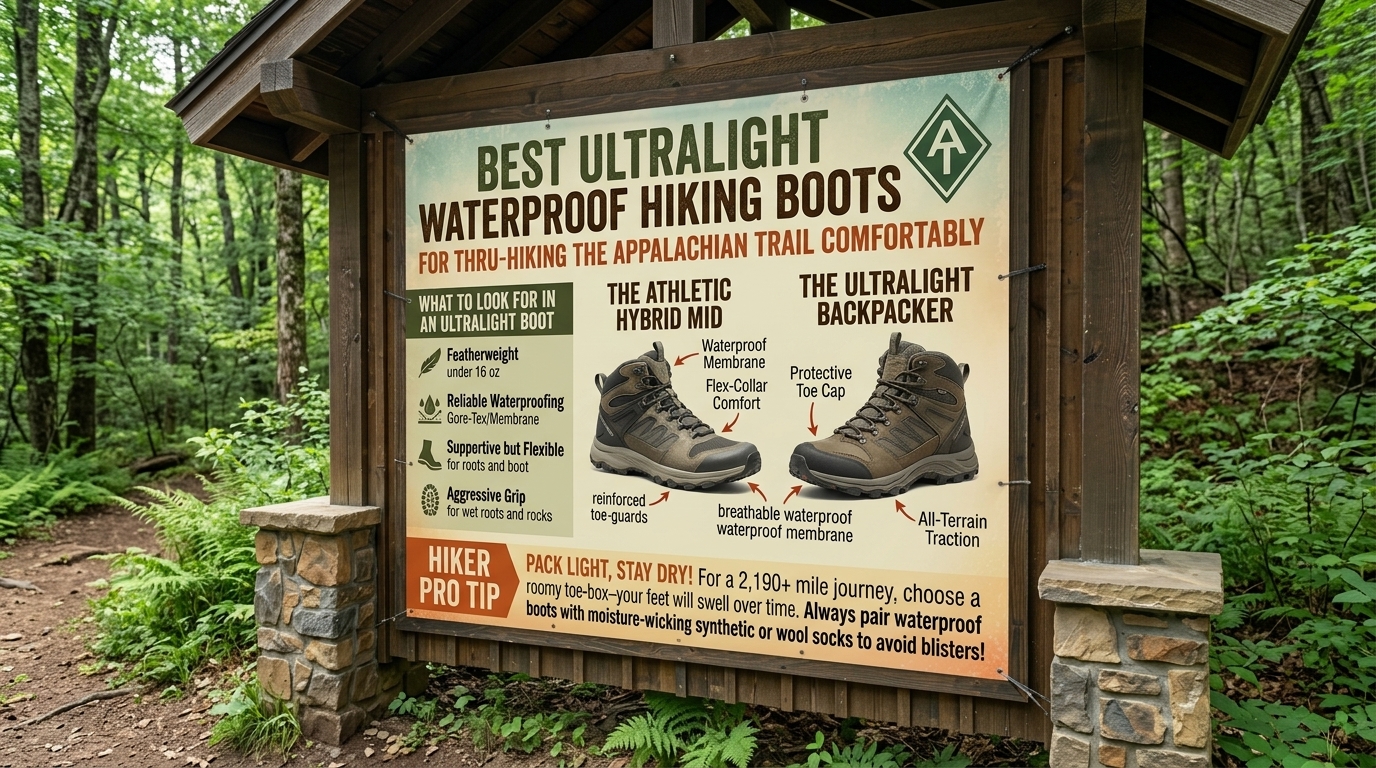
Embarking on a thru-hike of the legendary Appalachian Trail (AT) is a life-changing endeavor. Stretching over 2,190 miles from Springer Mountain in Georgia to Mount Katahdin in Maine, the AT presents every imaginable terrain and weather hazard: slick granite slabs in New York and New Jersey, relentless rocky ascents in Pennsylvania, deep mud and roots in Washington and New England, and unpredictable downpours across the eastern seaboard.
For decades, the standard wisdom for thru-hikers was to wear heavy, stiff, full-grain leather boots. However, modern footwear technology has revolutionized long-distance trekking. Today’s thru-hikers demand gear that combines the speed and agility of trail runners with the essential protection and moisture defense of a dedicated boot.
Enter the ultralight waterproof hiking boot.
If you want to keep your feet dry through relentless mountain downpours, protect your ankles from hidden roots, and avoid the crushing leg fatigue caused by heavy footwear, choosing the right pair of ultralight waterproof boots is paramount. This comprehensive, highly optimized guide explores the best ultralight waterproof hiking boots for thru-hiking the Appalachian Trail, complete with expert tips, regional insights, and answers to your most pressing questions.
The Appalachian Trail Footwear Dilemma: Waterproof vs. Ultralight
When prepping for a 2,000+ mile journey, every single ounce on your feet multiplies exponentially. Biomechanical studies show that a single pound on your feet requires the same energy expenditure as carrying five pounds on your back.
Historically, ultralight backpackers strictly opted for non-waterproof trail running shoes, arguing that once water gets into a waterproof shoe (either from deep puddles or heavy sweat), it takes too long to dry. However, the AT presents a unique challenge: it is notoriously damp, rainy, and muddy for months on end.
Why Ultralight Waterproof Boots Hit the Sweet Spot on the AT
- Reduced Leg Fatigue: Weighing significantly less than traditional leather boots (typically under 25 to 30 ounces per pair), ultralight boots save your calf muscles and Achilles tendons over high-mileage days.
- Protection Against Puddles and Slop: In damp sections of the trail, an ultralight waterproof membrane keeps your feet dry from intermittent puddles, morning dew, and light drizzle.
- Ankle Support with Zero Bulk: While trail runners work well for many, thru-hikers carrying a fully loaded pack over the jagged rocks of Pennsylvania or the muddy roots of New England often appreciate the structural ankle stability of a lightweight mid-height boot.
Key Features to Look For in AT Thru-Hiking Boots
When evaluating boots for an Appalachian Trail thru-hike, standard comfort isn’t enough; you need durability that can withstand thousands of miles of intense abuse.
- Weight: Look for boots that weigh under 30 ounces per pair. Every ounce saved keeps you moving efficiently over long distances.
- Waterproof-Breathable Membranes: High-end membranes like GORE-TEX or proprietary waterproof liners keep external water out. Ensure the boot features a gusseted tongue to prevent water from spilling in over the laces.
- Durable Outsoles (Vibram Megagrip or Equivalent): The AT is famous for wet tree roots and slick rocks. Sticky rubber outsoles with multi-directional lugs are mandatory to prevent sliding.
- Toe Cap Protection: Bumping your toes against hidden rocks under forest leaves is an everyday occurrence on the AT. A robust rubber toe cap protects your nail beds from trauma.
Top Ultralight Waterproof Hiking Boots for the Appalachian Trail
To help you conquer the green tunnel in comfort, here are the top-performing ultralight waterproof boots engineered for long-distance thru-hiking.
1. Salomon X Ultra 4 Mid GORE-TEX
- Average Weight: Approx. 22 oz – 24 oz per pair
- Why It Works: The Salomon X Ultra series is practically royalty among long-distance hikers. It bridges the gap between a technical trail runner and a supportive mid-height boot. Featuring a GORE-TEX waterproof membrane, an Advanced Chassis for lateral stability on rocky terrain, and a sticky Contagrip outsole, it offers incredible agility without sacrificing ankle support or moisture protection.
2. Altra Lone Peak All-Weather Mid (Altra All-Wthr Mid)
- Average Weight: Approx. 20 oz – 22 oz per pair
- Why It Works: If you love the famous foot-shaped toe box of the Altra Lone Peak but need wet-weather protection, this is your boot. It features Altra’s signature zero-drop platform and a wide forefoot that allows your toes to splay naturally (preventing blisters and bunions over high mileage), coupled with a lightweight eVent or proprietary waterproof upper.
3. Merrell Moab Speed Mid GORE-TEX
- Average Weight: Approx. 25 oz per pair
- Why It Works: Merrell took the legendary comfort of the Moab platform and redesigned it into a modern, weight-conscious speed hiker. Utilizing GORE-TEX waterproofing, float-pro foam midsoles, and a durable rock plate, it handles the punishing terrain of the AT while keeping your feet light, cushioned, and dry.
4. Hoka Anacapa 2 Mid GTX
- Average Weight: Approx. 27 oz per pair
- Why It Works: For hikers who want maximalist cushioning to absorb the endless pounding of rocky trails, the Hoka Anacapa 2 Mid GTX delivers. Despite its chunky appearance, it is remarkably lightweight, utilizing a waterproof nubuck leather upper, GORE-TEX Invisible Fit technology, and a Vibram Megagrip outsole for supreme traction on wet AT granite.
Essential Thru-Hiking Tips for Foot Care on the Appalachian Trail
No matter how high-tech your boots are, a 2,000-mile footpath will test your feet to their absolute limits. Implement these proven strategies to prevent common trail injuries:
- Sizing Up is Mandatory: Your feet will swell significantly over long days of walking, especially in warmer weather. Always buy your thru-hiking boots a full half-size to a full size larger than your normal street shoes to prevent toe jam and black toenails on descents.
- Pack Multiple Pairs of Merino Wool Socks: Pair your waterproof boots with high-density merino wool socks. Merino wool naturally regulates temperature, resists odor, and keeps your feet warm even if they happen to get damp from sweat.
- Air Out Your Feet at Camp: As soon as you roll into camp at the end of the day, take off your hiking boots and wet socks immediately. Let your feet breathe and dry out overnight, and switch to camp shoes or sandals.
- Treat Hot Spots Instantly: Never ignore a hot spot or minor friction point. Stop immediately, apply a piece of Leukotape, moleskin, or anti-blister balm before a blister forms.
Frequently Asked Questions (FAQs)
1. Are waterproof boots too hot for summer thru-hiking on the Appalachian Trail?
During the height of summer (July and August), waterproof boots can trap heat and sweat, especially in humid southern states like Georgia, North Carolina, and Virginia. Many thru-hikers choose waterproof boots for the damp spring starts and rainy northern sections (New York, Vermont, New Hampshire, Maine), while some switch to non-waterproof mesh shoes for mid-summer.
2. How many pairs of boots will I go through on an AT thru-hike?
Because ultralight boots use lightweight materials and soft rubber outsoles to save weight, most hikers go through 2 to 3 pairs of shoes or boots over the course of a 2,190-mile thru-hike.
3. Do waterproof boots dry out if water gets inside?
If water splashes over the collar of a waterproof boot or if your feet sweat heavily, moisture can get trapped inside the waterproof membrane. Drying them out takes longer than breathable mesh shoes, requiring you to remove the insoles and stuff them with dry socks or newspaper overnight.
4. Is ankle support necessary for the Appalachian Trail?
It depends on personal preference and ankle strength. While many modern thru-hikers use low-top trail runners, lightweight mid boots provide extra reassurance against ankle rolls when navigating the notoriously rocky, root-strewn paths of Pennsylvania and New England.
5. Should I buy wide-width hiking boots for a thru-hike?
If your feet tend to swell or if you have wide forefeet/bunions, buying dedicated wide-width (EE) boots or a brand with a naturally spacious toe box (like Altra) is crucial to prevent agonizing pressure and blisters.
6. How do I prevent blisters when breaking in new boots on the trail?
Wear your boots on short training hikes for a few weeks before your thru-hike. On the trail, wear moisture-wicking merino wool socks, keep your feet clean of dirt, and use athletic tape or blister pads at the first sign of friction.
7. Are zero-drop boots good for the Appalachian Trail?
Yes, many hikers successfully use zero-drop shoes like the Altra All-Wthr Mid. However, if you are not accustomed to zero-drop footwear, transition to them gradually months before your hike to avoid straining your Achilles tendons.
8. What is the best way to clean my boots during an AT thru-hike?
When you stop at trail towns or hostels, rinse off caked-on mud with water and a soft brush. Keeping mud off your boots prevents it from clogging the breathable pores of your waterproof membrane.
9. Do I need gaiters with lightweight waterproof boots?
Yes, wearing low-profile trail gaiters prevents small rocks, twigs, dirt, and sand from sliding over the collar of your boots as you hike through leaf litter on the AT.
10. Can I get my boots repaired if they blow out mid-trail?
Ultralight boots are built for performance and weight savings rather than lifetime durability. While minor sole separation can sometimes be fixed with gear glue (like Shoe Goo), most thru-hikers simply have a replacement pair shipped to an outfitter or post office along the trail when their boots wear out around the 500-to-800-mile mark.
Conclusion
Tackling an Appalachian Trail thru-hike requires careful gear curation, and your footwear choice is arguably the most important decision you will make. By selecting a pair of high-performance, ultralight waterproof hiking boots—such as the Salomon X Ultra 4 Mid GORE-TEX or Altra All-Wthr Mid—you secure the ideal balance of moisture protection, ankle security, and featherweight agility. Dial in your fit, take meticulous care of your feet, and step onto the trail ready to conquer every mile from Georgia to Maine.
Leave a Reply