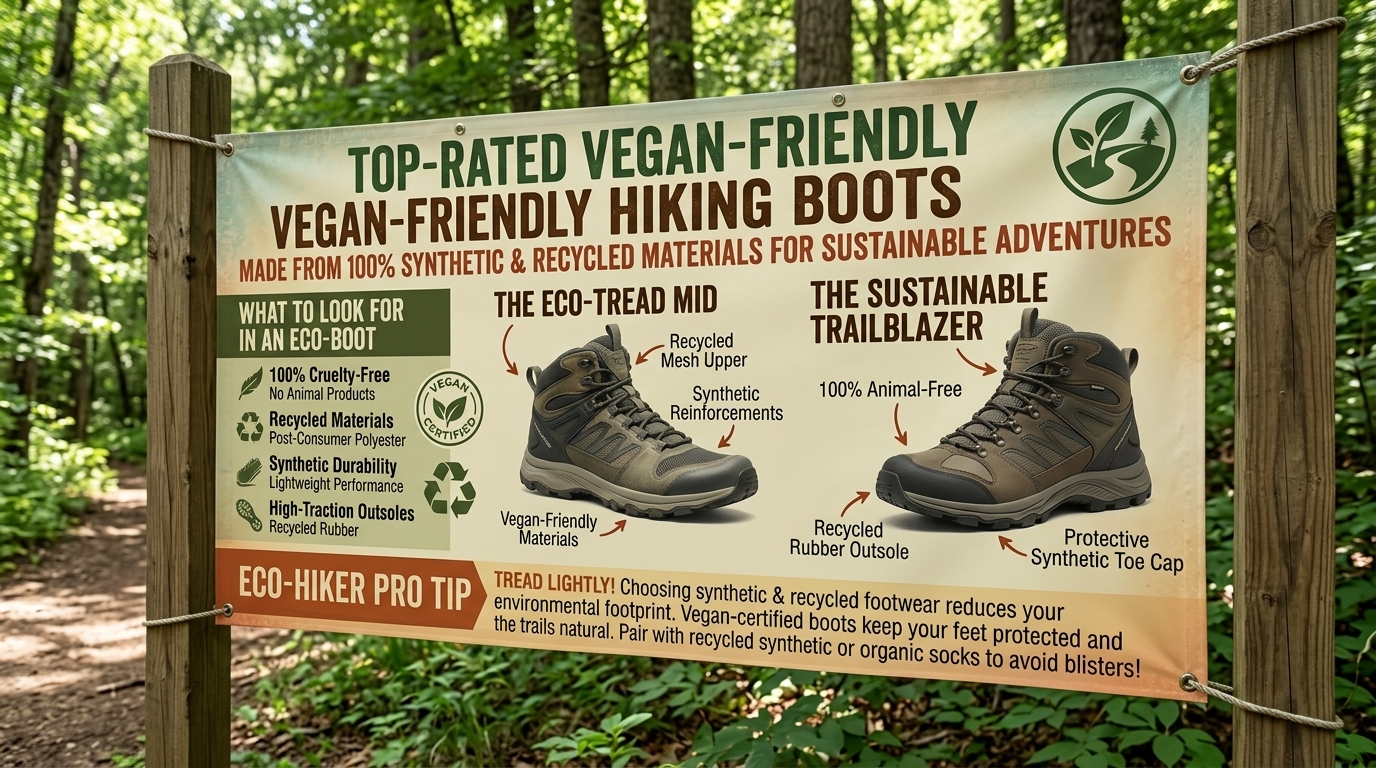
The modern outdoor industry is undergoing a massive ethical and ecological transformation. For decades, traditional hiking boots relied heavily on full-grain leather, suede, and animal-derived glues. Today, conscious outdoor enthusiasts no longer have to choose between high-performance trail footwear and their ethical values.
The rise of advanced synthetic textiles, plant-based innovations, and closed-loop recycled plastics has made it possible to engineer hiking boots that outperform old-school leather models. These vegan-friendly boots offer superior breathability, lighter weights, rapid drying times, and zero animal cruelty—all while helping clean up our oceans and landfills.
Whether you are navigating coastal fog in San Francisco and Washington, tackling rocky multi-day ascents in New York and California, or training on rugged trails in Texas, this comprehensive guide covers the top-rated vegan hiking boots built from synthetic and recycled materials, alongside essential buying tips and regional care strategies.
What Makes a Hiking Boot “Vegan-Friendly”?
At first glance, a pair of hiking boots might look like simple fabric and rubber, but animal products hide in surprising places throughout traditional outdoor gear. To be certified or genuinely considered vegan, a hiking boot must completely omit:
- Full-Grain Leather, Suede, and Nubuck: Hides sourced from cows, pigs, or goats.
- Animal-Based Glues: Traditional shoemaking adhesives frequently use collagen derived from horse or cow connective tissues. True vegan brands explicitly use synthetic, plant-based, or resin glues.
- Wool Linings or Shearling: Often found in winter models as insulation or comfort footbeds.
Instead, top-tier vegan boots utilize high-performance synthetics like Cordura nylon, recycled polyester mesh, Kevlar reinforcements, and technical waterproof membranes (like GORE-TEX or proprietary waterproof liners) paired with cruelty-free binding agents.
Key Benefits of Synthetic and Recycled Hiking Boots
Choosing synthetic and recycled vegan footwear offers distinct functional advantages on the trail over traditional leather options:
- Featherweight Construction: Synthetic meshes and recycled plastics weigh significantly less than heavy leather. This reduces foot and ankle fatigue over high-mileage days.
- Zero Break-In Period: While stiff full-grain leather can take weeks of painful blistering to soften, synthetic vegan boots are supple right out of the box.
- Eco-Friendly Circular Economy: Many leading brands utilize ocean plastics, recycled polyester (rPET) laces and linings, and post-consumer rubber outsoles, actively diverting waste from landfills.
- Faster Drying Times: Synthetic materials absorb minimal water compared to leather. If your boots get saturated during a stream crossing or a sudden downpour, they dry out remarkably fast.
Top-Rated Vegan Hiking Boots for the Trail
To help you find the perfect pair for your next trek, here are the highest-rated vegan hiking boots on the market, combining eco-friendly recycled components with uncompromising trail performance.
1. La Sportiva Ultra Raptor II Mid GTX
- Materials: AirMesh synthetic upper, microfiber reinforcements, and GORE-TEX waterproof membrane with recycled components; 100% vegan-certified construction.
- Why It Works: Regarded by many thru-hikers as the gold standard for synthetic technical footwear, the Ultra Raptor II Mid GTX delivers the rugged protection of a heavy leather boot at a fraction of the weight. Featuring an aggressive FriXion rubber outsole and a supportive stability chassis, it handles steep, rocky terrain in California, New York, and Washington with absolute confidence.
2. Merrell Moab Speed 2 Mid GTX (or Moab Speed Mid)
- Materials: 100% recycled mesh upper, recycled laces, webbing, and mesh lining, paired with a GORE-TEX waterproof membrane and FloatPro Foam midsole.
- Why It Works: Merrell has made sustainability a core priority in their lineup. The Moab Speed 2 Mid takes the legendary, wide-friendly comfort of the original Moab and infuses it with eco-conscious recycled plastics. It features a Vibram TC5+ or XS Trek EVO outsole that delivers exceptional grip across wet and dry terrain while keeping your footprint light on the planet.
3. Adidas Terrex Free Hiker 2.0 (Low or Mid)
- Materials: Primeknit textile upper made with at least 50% Parley Ocean Plastic and 50% recycled polyester, boosted by Continental Rubber outsoles.
- Why It Works: For hikers who prioritize supreme cushioning and a sock-like fit, the Adidas Terrex Free Hiker line is unmatched. The upper hugs your foot dynamically while actively utilizing upcycled marine plastic debris. The responsive Boost midsole cushions every step, making it an ideal choice for fast-paced day hikes and long-distance paths.
4. Altra Lone Peak All-Weather Mid (Altra All-Wthr Mid)
- Materials: Synthetic weather-resistant upper, balanced zero-drop platform, and MaxTrac sticky rubber outsole.
- Why It Works: If you suffer from bunions or wide forefeet, the Altra Lone Peak All-Weather Mid is a game-changer. It features Altra’s signature foot-shaped toe box, allowing your toes to splay naturally without painful friction. While built with lightweight synthetic materials rather than heavy leather, it provides exceptional comfort for long-distance backpacking.
Regional Performance: How Vegan Boots Handle Diverse Terrains
Different environments test synthetic and recycled materials in unique ways:
- Texas & California: Arid conditions, fine dust, and jagged granite require breathable mesh uppers and durable rock plates. Synthetic vegan shoes excel here because they vent heat rapidly and prevent overheating.
- Washington & San Francisco: Coastal moisture, slick marine layers, and muddy forest floors demand robust waterproof membranes (like GORE-TEX) paired with deep, multi-directional rubber lugs to prevent slipping on wet tree roots.
- New York: Rapidly changing weather—from humid summer heatwaves to slick autumn mud—highlights the versatility of lightweight synthetic boots that dry quickly after unexpected downpours.
Essential Tips for Maintaining Vegan Hiking Boots
To maximize the lifespan of your synthetic and recycled hiking boots, incorporate these simple maintenance habits:
- Brush Away Dirt Regularly: Fine dust and dirt act like sandpaper on synthetic mesh fibers. Use a soft brush and lukewarm water to clean off mud after every hike.
- Avoid High Heat: Never place synthetic shoes near a campfire, heater, or in direct hot sunlight to dry. Excessive heat can warp synthetic foams and melt eco-friendly adhesives.
- Reapply DWR Treatments: Over time, the outer water-repellent coating on synthetic uppers wears off. Spray them periodically with a eco-friendly, water-based DWR spray to maintain moisture shedding.
Frequently Asked Questions (FAQs)
1. Are vegan hiking boots as durable as leather boots?
High-end synthetic vegan boots (like those built with Cordura mesh or ballistic textiles) match or even exceed the durability of traditional leather while shedding weight. However, ultra-lightweight mesh models may wear out slightly faster than thick, full-grain leather.
2. How can I verify if a hiking boot is 100% vegan?
Check the manufacturer’s specifications for explicit mentions of “synthetic,” “man-made,” or “vegan-certified.” Look closely at the glue used, as some brands use synthetic adhesives even if the upper is fabric. Brands like La Sportiva, Merrell, and Adidas clearly label their vegan-friendly lines.
3. Do recycled plastic hiking boots feel different on feet?
Not at all. Recycled polyester and upcycled ocean plastics are engineered into high-performance technical threads that feel identical to virgin synthetic fibers, offering the same breathability and strength.
4. Are waterproof vegan boots hot in the summer?
Waterproof membranes (like GORE-TEX) can trap some heat in scorching summer temperatures. For hot, dry climates like Texas, many vegan hikers prefer non-waterproof, highly breathable mesh trail shoes.
5. Do synthetic vegan boots require a break-in period?
Generally, no. Synthetic and textile uppers are flexible right out of the box, meaning you can take them on a long day hike immediately without worrying about painful blisters.
6. Can I wash my synthetic hiking boots in a washing machine?
No. Machine washing subjects your boots to violent agitation and extreme tumbling that can break down structural glues, ruin waterproof membranes, and warp the sole out of shape. Always hand wash them.
7. Do vegan hiking boots offer good ankle support?
Yes, mid-height synthetic vegan boots (such as the La Sportiva Ultra Raptor II Mid) offer robust ankle stability and protective collars similar to traditional leather hiking boots.
8. What is the best way to dry wet synthetic boots?
Remove the insoles, loosen the laces, pull the tongue forward, and let them air dry in a well-ventilated room at normal room temperature. Stuffing them with clean newspaper accelerates the process.
9. Are vegan boots more expensive than regular leather boots?
Not necessarily. Vegan hiking boots span the exact same price spectrum as leather boots, ranging from budget-friendly options around $100 to high-performance technical models costing $180 to $220+.
10. Do recycled materials compromise the waterproof integrity of the boot?
No. Waterproofing is handled by an internal membrane (such as an inner bootie). The outer recycled fabric serves as a protective, eco-friendly shell, meaning waterproofing performance remains uncompromised.
Conclusion
Stepping onto the trail in a pair of top-rated, vegan-friendly hiking boots made from synthetic and recycled materials allows you to explore the great outdoors while aligning your footwear choices with your ethical and environmental values. From the rugged peaks of Washington and New York to the sun-baked trails of California and Texas, modern eco-conscious boots deliver elite performance, featherweight agility, and cruelty-free comfort. Choose your ideal pair, lace up, and tread lightly on your next wilderness adventure.
Leave a Reply