What Are the Best Socks to Wear With Waterproof Hiking Boots to Prevent Sweat
There is a common paradox in outdoor gear that every hiker learns the hard way: you invest in a pair of high-end waterproof hiking boots to keep rain and streams out, only to realize that by mile five, your feet are entirely soaked anyway—not from external water, but from your own sweat.
When you zip your feet inside a waterproof membrane (like GORE-TEX), you create a microclimate. While these membranes are designed to be “waterproof-breathable,” their breathability drops drastically when ambient humidity rises or when you are working hard on a steep incline. If you pair those boots with the wrong socks, your feet become trapped in a miniature sauna, leading to skin maceration, painful friction hotspots, and debilitating blisters.
Whether you are exploring humid lowland trails in Texas, navigating damp coastal marine layers in San Francisco and California, trekking through wet woodland paths in New York, or tackling rainy alpine tracks in Washington, managing foot moisture starts with your socks.
This comprehensive, highly optimized guide explores the science of foot sweat, why cotton is your worst enemy, the absolute best sock materials and brands to wear with waterproof boots, professional prevention tips, and answers to your most pressing questions.
The Science of Foot Sweat Inside Waterproof Boots
To understand why your feet sweat so much in waterproof boots, you must look at basic thermodynamics and human physiology.
1. The Sweat Gland Concentration
Your feet contain over 250,000 sweat glands—more per square inch than almost any other part of your body. Together, they can produce up to half a pint of moisture per day during strenuous physical exertion.
2. The Waterproof Barrier Bottleneck
Waterproof hiking boots rely on a dense interior membrane that blocks liquid water molecules from entering from the outside. However, water vapor (your sweat) has a much harder time escaping, especially if the outer leather or synthetic fabric of your boot becomes saturated with rain or external water, which blocks the membrane’s ability to breathe.
When sweat cannot escape through the boot, it accumulates inside your sock. If your sock cannot manage that moisture, your skin absorbs the liquid, softens, and loses its structural integrity, setting the stage for severe blistering.
The Cardinal Rule: Why Cotton is the Ultimate Enemy
If there is one absolute rule in hiking and backpacking, it is this: Cotton is death.
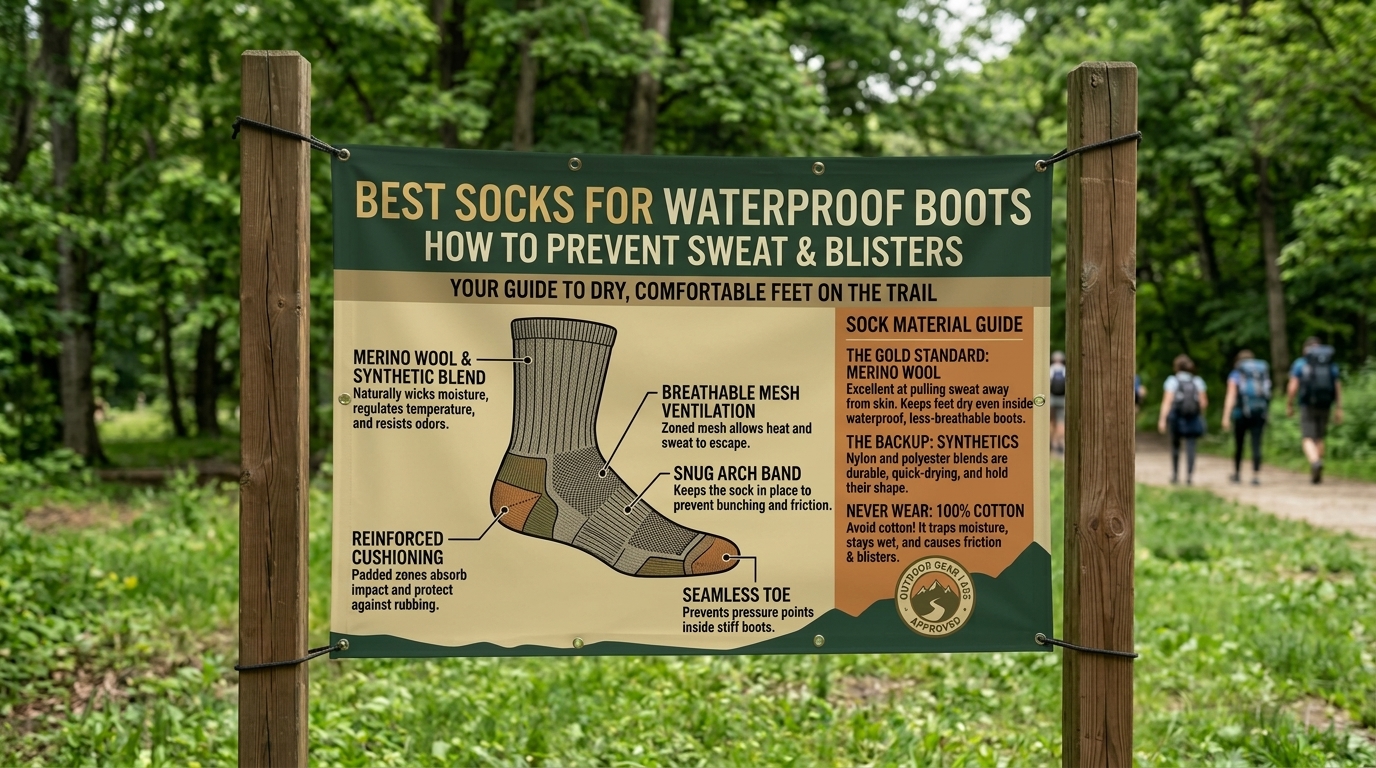
- How Cotton Behaves: Cotton fibers are hydrophilic (water-loving). When you sweat, cotton absorbs moisture like a microscopic sponge and holds onto it directly against your skin. It does not wick moisture away, it loses all thermal insulating properties when damp, and it bunches up into abrasive folds inside your boot.
- The Result: Cold, soggy feet in winter, blistering friction in summer, and total foot discomfort. Never wear casual cotton athletic socks or cotton tube socks with waterproof hiking boots.
The Gold Standard: Best Sock Materials for Waterproof Boots
To keep your feet dry and cool inside waterproof footwear, you need performance fibers engineered to pull moisture away from your skin through a process called wicking.
1. Merino Wool (The Undisputed King)
Merino wool (harvested from specialized Merino sheep) is widely considered the ultimate sock material for all-season hiking.
- Natural Micro-Wicking: Merino wool fibers have a complex cellular structure that pulls moisture vapor away from your skin and transports it to the outer surface of the sock, where it can evaporate.
- Thermal Regulation: Unlike synthetic fabrics that can feel clammy, merino wool keeps your feet warm when it’s cold and surprisingly cool when it’s hot.
- Natural Odor Resistance: Merino wool contains natural antimicrobial properties that neutralize odor-causing bacteria, meaning you can wear the same pair of wool socks for multiple days on a backpacking trip without offending your tentmates.
2. High-Performance Technical Synthetics (Polyester and Nylon)
If you are allergic to wool or prefer a slicker, athletic feel, high-density technical synthetics (such as Coolmax, polyester, and nylon) are exceptional.
- Synthetics dry significantly faster than wool and offer high tensile strength, meaning they resist wear and tear over hundreds of miles of friction against your boot lining.
Top Sock Recommendations for Waterproof Hiking Boots
To help you choose the best socks for sweat prevention, here are the top-rated brands and models trusted by outdoor professionals.
1. Darn Tough Hiker Micro Crew Cushion / Full Cushion
- Why They Work: Darn Tough is a legendary brand built in Vermont, backed by an unconditional lifetime warranty. Their socks feature a high-density merino wool blend (typically around 61% merino wool, 37% nylon, 2% Lycra spandex). The nylon reinforcement provides incredible durability, while the merino wool manages sweat effortlessly. The micro-crew height sits just above the collar of a standard mid-cut hiking boot, preventing the boot from rubbing against your lower calf.
2. Smartwool Hike Classic Edition Full Cushion Crew
- Why They Work: Smartwool pioneered modern merino wool hiking socks. The Hike Classic line features flat-knit toe seams to eliminate friction points and elasticized arches that lock the sock in place, preventing bunching and hot spot formation inside waterproof boots.
3. Farm To Feet Boulder Micro Crew
- Why They Work: 100% American-sourced merino wool constructed with targeted cushioning zones. Farm To Feet optimizes breathability by knitting lighter, more open mesh zones across the top of the foot where heat and sweat accumulate most.
Proactive Strategies to Prevent Foot Sweat on the Trail
Even the best merino wool socks cannot completely offset poor moisture management habits. Use these expert techniques to keep your feet bone-dry:
- Embrace the Two-Sock System: For long-distance backpacking or extreme sweat conditions, wear a ultra-thin, synthetic liner sock directly against your skin, topped with a medium-weight merino wool outer sock. The liner sock wicks moisture instantly to the wool outer layer, neutralizing friction.
- Air Out Your Feet During Breaks: Every time you stop for a 10-minute rest on the trail, take off your waterproof boots and peel off your socks. Let your feet air-dry in the breeze for a few minutes while you rest.
- Bring a Fresh Pair for Camp: Never sleep in the same socks you hiked in. Pack a dedicated, bone-dry pair of merino wool socks stored in a waterproof ziplock bag inside your backpack exclusively for sleeping or evening camp use.
- Apply Anti-Friction Powders or Balms: If you suffer from hyperhidrosis (excessive sweating), dusting your feet with an anti-friction powder or applying a specialized anti-chafe stick before putting on your socks creates an invisible moisture-resistant barrier.
Frequently Asked Questions (FAQs)
1. Are thick socks too hot to wear in waterproof boots during summer?
It seems counterintuitive, but wearing a medium-cushion merino wool sock in warm weather is actually better than wearing a thin, cheap sock. High-density merino wool wicks sweat away from your skin far more efficiently than thin cotton, keeping your feet drier and cooler overall.
2. Why do my feet still sweat in waterproof boots even with wool socks?
Waterproof membranes (like GORE-TEX) have physical limitations. When the ambient humidity is 100% or when you are hiking vigorously uphill, your body produces sweat faster than the boot membrane can push it out. Socks manage sweat, but they cannot completely override poor exterior breathability.
3. Can I wear cotton socks if I use foot powder?
No. Foot powder absorbs moisture temporarily, but once it mixes with sweat, it turns into a paste that clumps up inside a cotton sock, accelerating friction and causing severe blisters. Always pair foot powder with merino wool or synthetic socks.
4. How many pairs of hiking socks should I pack for a weekend trip?
For a standard weekend backpacking trip, pack three pairs of merino wool socks: two active-hiking pairs that you alternate daily, and one dedicated, pristine pair kept in a waterproof bag exclusively for sleeping.
5. Do merino wool socks shrink in the washing machine?
Machine-washing merino wool on a gentle, cold cycle is generally fine, but never put merino wool socks in a high-heat electric clothes dryer, as high heat will shrink them down to toddler size. Always air-dry or tumble-dry them on low heat.
6. Are synthetic socks better for hot weather than wool?
Both work well, but it comes down to personal preference. High-performance synthetics dry slightly faster than wool and feel cooler initially, but merino wool resists odor much longer, making it the preferred choice for multi-day trips.
7. What sock height should I wear with mid-cut waterproof boots?
Always wear a crew or micro-crew height sock that extends at least an inch above the collar of your boots. Low-cut or ankle socks allow the rigid leather or synthetic collar of the boot to rub directly against your bare skin, causing Achilles tendon blisters.
8. How do I wash and maintain the wicking performance of my hiking socks?
Wash your wool socks inside out on a gentle cycle using mild detergent. Avoid liquid fabric softeners or bleach entirely, as fabric softeners coat the wool fibers in a waxy residue that destroys their natural moisture-wicking capabilities.
9. Should I wear waterproof socks inside waterproof boots?
Usually, no. Wearing a waterproof membrane sock inside a waterproof boot creates a double-barrier trap where your sweat has zero escape routes, resulting in swimmingly wet feet. Save waterproof socks strictly for emergency stream crossings or non-breathable shoe setups.
10. How many miles will a quality pair of merino wool hiking socks last?
High-density merino wool socks reinforced with nylon (like Darn Tough) typically last between 500 to 1,000+ miles of active trail use before wearing thin at the heel or toe.
Conclusion
Conquering foot sweat inside waterproof hiking boots is all about choosing the right fabric armor. By banishing cotton completely and investing in high-density merino wool socks (such as Darn Tough or Smartwool), you unlock natural micro-wicking, thermal regulation, and unmatched blister protection. Pair your socks with smart trail habits—like airing out your feet during breaks and carrying a clean sleeping pair—and you will keep your feet dry, comfortable, and pain-free across the trails of Washington, New York, California, San Francisco, Texas, and beyond!
Leave a Reply