There is a distinct moment of psychological tension that every backpacker knows intimately: you crest a ridge, drop into a lush valley, and hear it before you see it—the low, heavy roar of white water. Rushing alpine streams, snowmelt-swollen creeks, and rain-slicked river crossings are the ultimate test of wilderness navigation.
Whether you are charting a rugged path through the Olympic National Park in Washington, negotiating granite-strewn backcountry channels in California’s Sierra Nevada, navigating unpredictable terrain in New York or Texas, or planning a trek that demands absolute peak performance, your footwear is your lifeline. When a misstep means soaked feet, freezing toes, or worse—losing your footing in a torrential current—having the right comfortable, secure hiking boots changes everything.
Choosing a boot for trips featuring aggressive water crossings requires balancing two opposing forces: waterproofing vs. drainage/drying speed, and plush comfort vs. technical stability. This comprehensive guide breaks down everything you need to know, ranks the absolute best boots on the market for water-heavy routes, and offers master tips to keep you safe and comfortable.
1. The Great Debate: Waterproof Boots vs. Quick-Drying Non-Waterproof Footwear
Before selecting a pair of boots for a river-heavy backpacking trip, you must understand how different footwear behaves when submerged.
Waterproof Membrane Boots (Gore-Tex, Keen.Dry, etc.)
- How they work: Built with an internal waterproof/breathable bootie that stops water from entering through the upper.
- The River Crossing Reality: If the river is shallow (lower than your ankle or boot collar), you can step right through without a drop getting inside. However, if the water level exceeds your cuff, water pours over the top. Once trapped inside a waterproof boot, it acts like a bucket, and drying time can take days.
- Best for: Cold-weather backpacking, early spring melts, and intermittent shallow splashing.
Non-Waterproof / High-Drainage Trail Footwear
- How they work: Built with open mesh uppers and rapid-drainage ports that let water flow freely in and out.
- The River Crossing Reality: Your feet will get immediately soaked during a crossing, but the shoes shed water rapidly and dry out from body heat within an hour of hiking on dry trail.
- Best for: Warm-weather expeditions, summer alpine routes, and high-frequency river crossings.
2. Top Comfortable Hiking Boots for River-Crossing Backpacking Trips
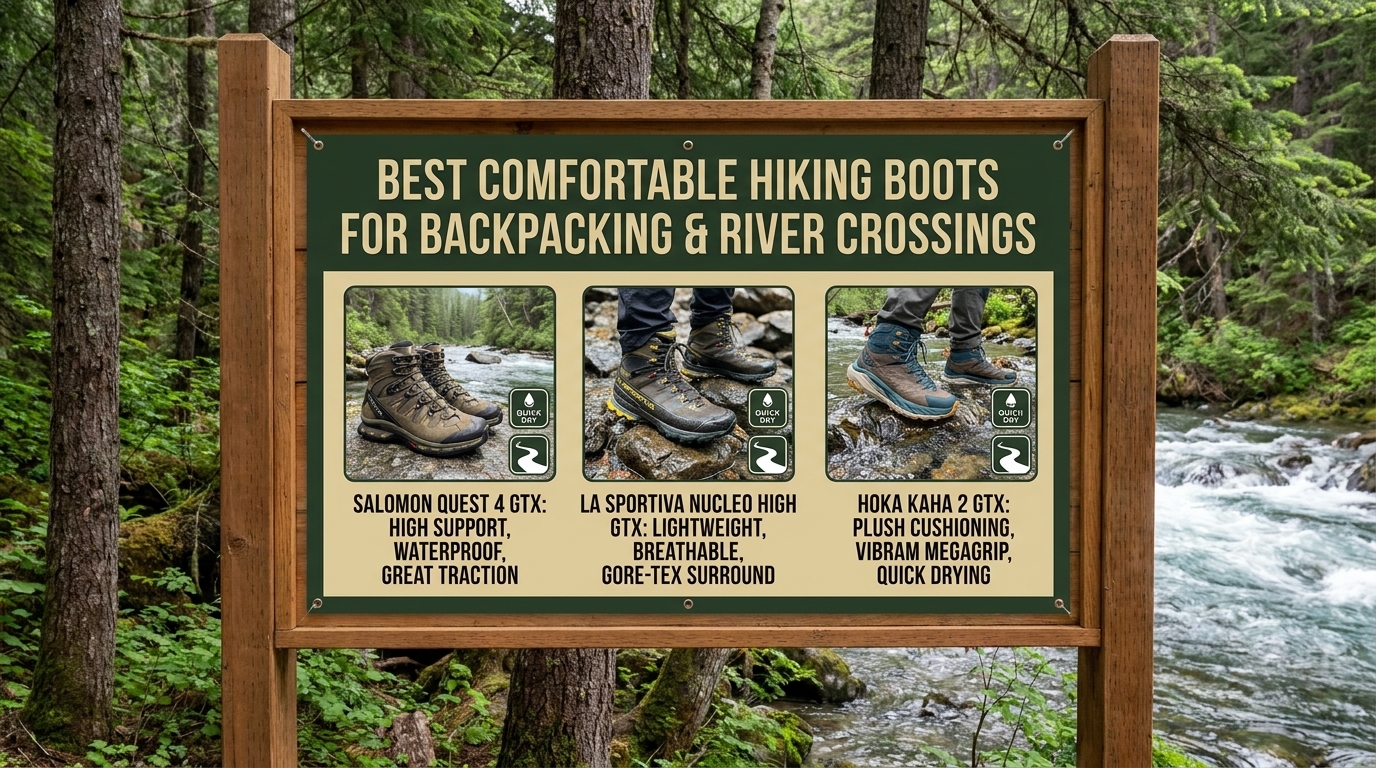
1. Salomon Quest 5 GTX – Best Overall for Heavy Backpacking & Deep Support
- Weight: ~2 lbs. 9 oz.
- Waterproofing: Gore-Tex
- Why it excels: If your trip involves heavy multi-day packs combined with technical water hazards, the Salomon Quest 5 GTX is a masterpiece. It features an exceptionally tall ankle collar, a stable chassis, and a brilliant Contagrip rubber outsole that bites into slick, algae-covered river rocks. During testing, testers noted that its leather and synthetic upper sheds external water droplets exceptionally well, keeping the boot light rather than waterlogged.
2. HOKA Anacapa 2 Mid GTX – Most Comfortable & Plush Ride
- Weight: ~2 lbs. 4 oz.
- Waterproofing: Gore-Tex
- Why it excels: Long miles with a heavy pack will crush your joints, but Hoka’s max-cushion platform absorbs impacts effortlessly. The Anacapa 2 features an extended heel geometry and waterproof nubuk leather. For river crossings, the plush collar fits snugly around the ankle to prevent loose debris and splash-overs from trickling in. It feels like wearing running shoes with the structural integrity of a heavy-duty backpacking boot.
3. KEEN Targhee IV Mid Waterproof – Best for Wide Feet & Wet Traction
- Weight: ~2 lb. 8.6 oz.
- Waterproofing: KEEN.Dry
- Why it excels: KEEN is legendary for comfort out of the box, offering a generous, foot-shaped toe box that lets your toes splay naturally. When crossing a rushing river, splayed toes are vital for balance. The Targhee IV features an upgraded, delamination-resistant sole construction and a sticky rubber outsole that grips wet timber and slick stones with remarkable confidence.
4. La Sportiva Ultra Raptor III Mid GTX – Best Agile Hybrid for Fast-and-Light Treks
- Weight: Lightweight category (~1 lb. 10 oz.)
- Waterproofing: Gore-Tex
- Why it excels: If you prefer to move fast, jump across rocks, and tackle high-mileage terrain where streams cross your path every mile, this boot bridges the gap between a technical mountaineering shoe and a nimble trail runner. The FriFrixion White sticky rubber compound on the sole offers some of the best wet-rock friction available in the outdoor industry.
3. Essential Techniques for Crossing Rushing Rivers Safely
Footwear is only half the battle. Crossing a swift current safely requires tactical execution:
- Never Cross Barefoot: Always wear footwear during a crossing. Bare feet lack traction and expose you to severe cuts from submerged rocks, broken glass, or hidden debris. If you don’t want to submerge your main boots, carry lightweight camp sandals (like strapped sports sandals) to swap into.
- Unbuckle Your Pack Hip Belt: This is a vital safety rule. If you lose your footing and fall into a rushing current, a buckled hip belt can trap you, causing your heavy pack to flip you face-down in the water. Always unclip your chest and hip straps before stepping into deep water.
- Use Trekking Poles as a Tri-Pod: Plant your trekking poles firmly upstream of your body. Move by sliding your feet along the riverbed rather than lifting them high, maintaining three points of contact with the earth at all times.
- Face Upstream: Angle your body slightly upstream into the current, taking diagonal steps toward the opposite bank.
4. Frequently Asked Questions (FAQ)
1. Should I wear waterproof boots or trail runners for river-heavy trails?
It depends on water temperature and frequency. If you are crossing ice-melt streams in freezing weather, waterproof boots keep your feet warm. If you are facing dozens of warm-water crossings a day, quick-draining trail runners are vastly superior because they don’t trap water.
2. How can I dry out my waterproof hiking boots overnight on the trail?
Remove the insoles, stuff the boots tightly with clean socks, extra clothing, or newspaper pages to wick away internal moisture. Place them near (not directly on) your campfire, or prop them open facing a gentle breeze. Never place them directly over high heat, as it will melt the glue and warp the leather.
3. Why do my feet hurt more after crossing a river in boots?
When boots get completely soaked, the interior padding absorbs gallons of water weight, softening your skin and causing socks to bunch up. This dramatically increases friction, leading to severe hot spots and blisters. Always wear moisture-wicking merino wool socks.
4. Are Gore-Tex boots completely waterproof during deep submersions?
No. Gore-Tex membranes keep water out during splashes and shallow puddles, but once the water level rises above the tongue gusset or collar of the boot, it floods inside. Once inside, the membrane prevents that water from escaping.
5. What is the best rubber compound for wet river rocks?
Look for specialized sticky rubber outsoles such as Vibram Megagrip, La Sportiva FriFrixion White, or Salomon Contagrip. Standard hard rubber outsoles act like ice skates on wet, slime-covered river stones.
6. Can I use pack towels to dry my feet after a crossing?
Yes! Keeping a small, ultralight microfiber camp towel in an easily accessible pocket of your backpack allows you to quickly dry your feet and put on fresh, dry liner socks once you reach the other side.
7. Should I loosen my boot laces before crossing a river?
Some backpackers loosen their laces slightly so that if they fall, they can kick their boots off easily. However, this reduces ankle stability in a rushing current. It is safer to keep them snug to maintain secure footing and prevent your foot from sliding inside the boot.
8. How do I prevent blisters if my boots stay wet for days?
Apply preventative anti-friction balm (like Glide) or medical tape to blister-prone hotspots before the hike begins. Change into dry wool socks every evening around camp, even if your boots remain damp.
9. Is it safe to cross a river that is flowing above my knees?
As a general backcountry rule, if water is flowing above your knees and the current is swift enough to destabilize your stance, it is unsafe to cross. Turn back or find a wider, shallower section upstream.
10. Do heavy leather boots dry slower than synthetic mesh boots?
Yes. Heavy full-grain leather boots absorb water into the hide and take significantly longer to dry out compared to lightweight synthetic mesh or treated textile boots. For extreme wet environments, synthetic hybrids dry much faster.
Conclusion
Conquering a backpacking trail defined by rushing rivers and water crossings requires a careful blend of physical preparation, smart gear selection, and sound decision-making. Whether you opt for the impenetrable ankle security of the Salomon Quest 5 GTX, the plush cloud-like comfort of the Hoka Anacapa 2, or a nimble quick-draining setup, matching your footwear to your environment ensures your feet stay protected. Pack smart, respect the power of moving water, and enjoy the adventure.
Leave a Reply