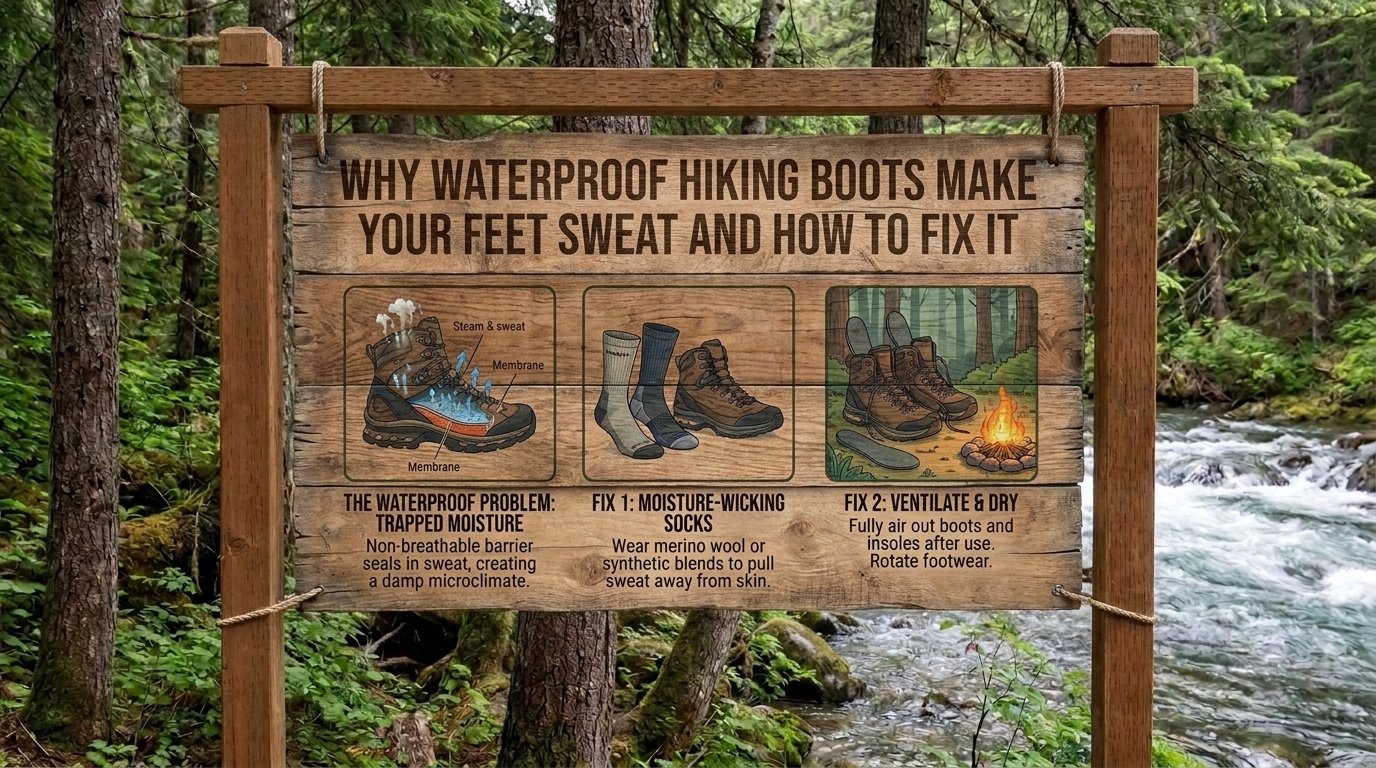
There is an ironic, deeply uncomfortable moment every hiker knows too well: you invest in a premium, 100% waterproof pair of hiking boots to keep your feet shielded from rain, mud, and river crossings, only to pull them off at camp and find your socks absolutely drenched. Your skin is waterlogged, pruned, and throbbing from friction.
Whether you are navigating the humid, unpredictable terrain of upstate New York, tackling rocky, arid paths in Texas and California, or climbing through the damp, mossy backcountry of Washington and the San Francisco Bay Area, dealing with “swamp foot” is an uncomfortable reality.
Understanding why waterproof boots trap moisture—and learning how to fix the microclimate inside your footwear—is the key to a blister-free, enjoyable backpacking trip.
1. The Science of the “Sweat-Box Effect”
To fix sweaty feet, you first need to understand the physics of footwear design.
- The Impermeability Paradox: A material that is completely impenetrable to external liquid water (like rain or puddles) also creates a formidable barrier to internal evaporation. While high-end waterproof-breathable membranes like Gore-Tex feature microscopic pores designed to let tiny water-vapor molecules escape, they operate under strict physical laws.
- Overwhelmed Vapor Transmission Rates (VTR): When you exert yourself on a steep backcountry climb, your feet can generate up to a half-cup of sweat per day to regulate body temperature. If your body produces sweat vapor faster than the boot’s membrane can push it out, the vapor condenses back into liquid water against the cold inner lining of the boot.
- Clogged Pores: Dried mud, fine trail dust, body oils, and salt from previous hikes can clog the microscopic pores of your waterproof membrane from both the inside and outside, effectively shutting down what little breathability the boot had.
2. External and Behavioral Factors That Amplify Sweat
Beyond the waterproof membrane itself, several everyday habits and gear choices supercharge moisture accumulation:
- The Cotton Trap: Wearing traditional cotton socks is a beginner’s fatal flaw. Cotton acts like a sponge, absorbing sweat and holding it directly against your skin. Once wet, cotton loses all insulating properties and creates high friction, leading directly to raw hot spots and blisters.
- Improper Sizing and Friction: If your boots are too tight, they restrict internal airflow entirely. Conversely, if they are too loose, your foot slides, generating high friction and thermal energy that triggers an aggressive sweat response.
- Ambient Temperature Mismatch: Wearing heavy, insulated waterproof winter boots during a scorching summer hike in Texas or California guarantees an extreme sweat response.
3. Proven Strategies to Keep Your Feet Dry and Cool
You don’t have to throw away your waterproof boots to conquer sweaty feet. Implement these field-tested strategies to manage moisture effectively:
Upgrade to Technical Socks
- Merino Wool or Synthetic Blends: Switch exclusively to merino wool or high-performance synthetic socks (like polypropylene or nylon blends). These fibers feature active moisture-wicking technology that pulls sweat away from your skin and pushes it toward the boot’s lining.
- Toe Sock Liners: Consider wearing thin, moisture-wicking toe sock liners underneath your main hiking socks. They prevent skin-on-skin friction between your toes and manage moisture exceptionally well.
Optimize Your Boot Maintenance
- Clean the Pores: Wash the inside and outside of your boots regularly. Use a specialized technical cleaner to strip away dirt, mud, and bodily oils that block the breathable membrane pores.
- Reapply DWR Sparingly: Ensure the outer fabric is treated with a Durable Water Repellent (DWR) spray. When the outer fabric “wets out” and stays soaked, it completely blocks internal moisture from evaporating outward.
Trail-Side Adjustments
- Air Out Frequently: During rest breaks or lunch stops, unlace your boots, pull the tongue forward, remove your insoles, and let your feet and socks air out for 5 to 10 minutes.
- Mid-Day Sock Change: Carry an extra pair of dry socks in your pack. Swapping out a damp pair halfway through a high-mileage day resets your skin’s microclimate and prevents maceration.
- Loosen the Laces: On long, steady climbs where you aren’t worried about ankle twisting, loosen your lower laces slightly to encourage a “chimney effect,” allowing trapped hot air to pump out of the collar as you walk.
4. Frequently Asked Questions (FAQ)
1. Do non-waterproof mesh hiking boots completely eliminate sweaty feet?
Not entirely, but they dramatically reduce it. Non-waterproof mesh boots offer maximum airflow and breathability. While your feet will still sweat from physical exertion, the moisture evaporates almost instantly, preventing the “swamp foot” accumulation typical of waterproof models.
2. Should I use foot powder or antiperspirant to stop sweating?
Yes. Applying a specialized foot powder or a light layer of unscented antiperspirant spray to clean, dry feet before putting on your socks can significantly curb sweat production throughout the day.
3. Why are my socks wet even when it hasn’t rained outside?
That moisture is 100% your own sweat. When waterproof boots cannot vent vapor fast enough, your perspiration condenses inside the boot, trickling down to pool in your socks, making it feel as though your boots are leaking.
4. Can I use a campfire or hair dryer to dry my sweat-soaked boots overnight?
Never use open flames, camp stoves, or high-heat blow dryers. Excessive heat melts adhesives, shrinks synthetic components, and warps leather. Instead, stuff your boots with newspaper, paper towels, or a clean spare shirt to absorb internal moisture overnight.
5. Are expensive Gore-Tex boots better at preventing sweat than budget waterproof boots?
Generally, yes. High-end membranes like Gore-Tex or eVent have higher Vapor Transmission Rates (VTR), meaning they allow significantly more water vapor to escape than cheaper, generic plastic-coated waterproof linings.
6. Does wearing thick wool socks make feet sweat more in warm weather?
Yes. Thick, heavy-cushion winter socks trap excess heat when temperatures rise, triggering an aggressive sweat response. Switch to lightweight or mid-weight merino wool hiking socks for spring and summer treks.
7. How do I know if my waterproof boots have stopped breathing?
If your boots used to keep your feet reasonably comfortable but now feel like rubber buckets that flood with moisture even in dry, cool weather, the microscopic pores of the membrane are likely clogged with body salts, dirt, or detergent residue. Deep cleaning them with a technical wash can restore partial breathability.
8. Is foot sweat dangerous on a backpacking trip?
Excessive sweat softens and breaks down the outer layer of skin (maceration), making it highly vulnerable to severe friction blisters, fungal infections (like athlete’s foot), and painful hot spots that can halt a trek.
9. Should I size up my waterproof hiking boots to improve ventilation?
Sizing up slightly (by a half-size) is a smart strategy. It accommodates thicker hiking socks, prevents toe bang on downhills, and creates a slightly larger air volume inside the boot, which enhances internal air circulation.
10. When should I choose waterproof boots over breathable trail runners?
Choose waterproof boots when hiking in cold, wet, snowy, or muddy conditions where keeping external moisture out matters more than breathability. For warm, dry, or high-output summer excursions, breathable non-waterproof footwear is usually the superior choice.
Conclusion
Waterproof hiking boots are an essential piece of armor for wet weather and stream crossings, but their sealed design creates a natural challenge for moisture management. By pairing your boots with high-performance merino wool socks, maintaining proper fit, cleaning your gear regularly, and taking advantage of trail-side air breaks, you can successfully beat the sweat trap and keep your feet comfortable on every mile of your journey.
What moisture-management strategies have you found most effective during your long-distance backpacking trips?
Leave a Reply