Packing for a vacation that blends urban exploration with light outdoor adventures is one of the ultimate suitcase dilemmas. You want footwear that is stylish enough for wandering through the historic streets of Manhattan, comfortable enough for racking up 20,000 steps around San Francisco or Rome, and technical enough to handle a dusty afternoon trail in California, Washington, or a Texas state park.
Bulky, stiff leather hiking boots are absolute overkill for light vacations. They take up half your luggage space, weigh down your carry-on, and look completely out of place when you sit down for dinner. What you need is the holy grail of travel footwear: the best lightweight hiking shoes for traveling and light trail walking.
This comprehensive guide explores why hybrid travel-hiking shoes are essential, reviews the absolute best models on the market, and shares expert packing and styling tips to streamline your next getaway.
1. Why Hybrid Travel-Hiking Shoes Are a Vacation Game-Changer
Traditional travel shoes (like standard fashion sneakers or canvas flats) lack the structural support, traction, and underfoot protection needed when you transition from a cobblestone piazza to a loose, dirt hiking path. Conversely, heavy-duty hiking boots are cumbersome.
Hybrid travel-hiking shoes bridge this gap by offering:
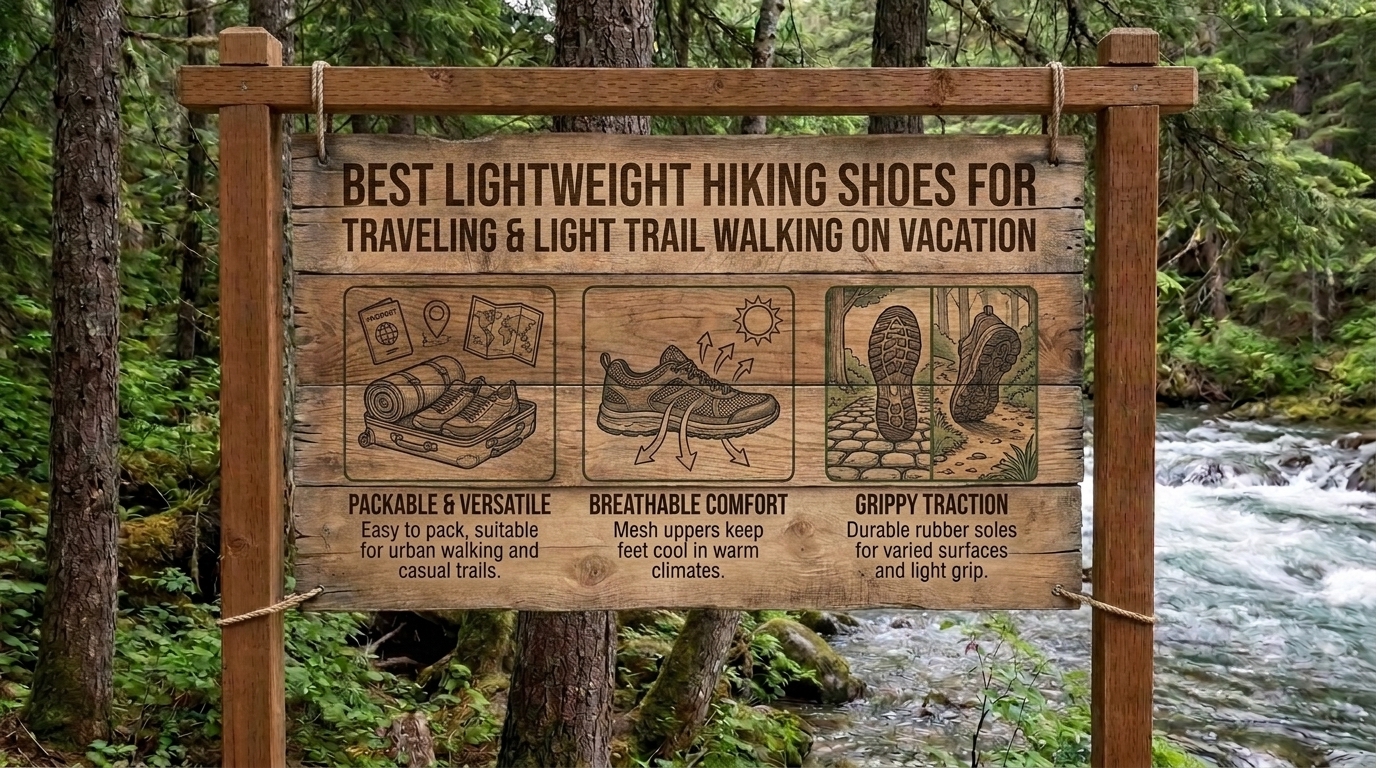
- Packability: They are lightweight and flexible enough to slide easily into a suitcase or backpack without adding punishing weight fees.
- All-Surface Traction: Instead of slick rubber or foam soles that slip on wet rocks or muddy park trails, they feature multi-directional lugged outsoles.
- Aesthetic Versatility: Many modern outdoor brands design these shoes with low-profile silhouettes and neutral color palettes that pair seamlessly with travel trousers, jeans, or athletic shorts.
2. Top Lightweight Hiking Shoes for Travel and Light Trails
1. Danner Trail 2650 Field Shoes – Best Overall for Style and Performance
- Weight (Pair): ~1 lb. 15 oz.
- Why they excel: Named after the grueling 2,650-mile Pacific Crest Trail, the Danner Trail 2650 is a masterclass in hybrid design. Featuring a durable leather and mesh upper with an ultralight EVA midsole and a Vibram 460 outsole, they provide exceptional grip on dirt while maintaining a sleek, urban-friendly look. They look just as good at a downtown coffee shop in Seattle or San Francisco as they do on a weekend trek.
2. Merrell Moab Speed 2 – Best Athletic Comfort & Breathability
- Weight (Pair): ~1 lb. 8 oz.
- Why they excel: Merrell took their legendary Moab hiking DNA and modernized it into a featherlight, running-shoe-inspired hybrid. The Moab Speed 2 features high-rebound cushioning, a breathable nylon mesh upper, and a Vibram TC5+ rubber outsole. They feel like running shoes on vacation city walks, yet they bite into loose gravel and dirt paths with total confidence.
3. Salomon X Ultra 4 Low – Best for Stability on Uneven Terrain
- Weight (Pair): ~1 lb. 10 oz.
- Why they excel: If your vacation involves steeper day hikes, rocky overlooks, or uneven national park trails, the Salomon X Ultra 4 Low provides unmatched lateral stability. Utilizing an Advanced Chassis embedded in the sole, it protects your ankles from rolling on loose scree while keeping your stride agile and lightweight.
4. Altra Lone Peak All-WTHR Low – Best for Wide Toe Splay & All-Day Comfort
- Weight (Pair): ~1 lb. 11 oz.
- Why they excel: Altra is famous for its FootShape toe box, which lets your toes spread out naturally—a massive relief when you are standing or walking for 10 hours straight. The Lone Peak All-WTHR version offers light weather resistance, zero-drop cushioning, and a sticky MaxTrac outsole. They are a favorite among minimalist travelers and long-distance hikers alike.
3. Key Features to Look For When Buying Travel Hiking Shoes
When shopping for shoes that must pull double duty on vacation, keep these critical factors in mind:
- Weight and Packability: Aim for shoes that weigh under 2 pounds per pair. Heavy shoes strain your legs during long museum days and bloat your luggage weight limit.
- Outsole Grip: Look for brand-name rubber compounds like Vibram, Contagrip, or sticky proprietary rubber. Avoid smooth-soled fashion sneakers that turn into ice skates on wet stone steps or dirt slopes.
- Breathability vs. Weather Resistance: For summer vacations or warm climates (like Texas or California), go with unlined, high-flow mesh uppers to keep your feet cool. For rainy destinations (like Washington or New York in spring), look for a light water-resistant or Gore-Tex model.
- Cushioning and Support: Look for molded EVA or polyurethane midsoles that absorb the harsh impact of concrete sidewalks and uneven trails alike.
4. Packing and Styling Tips for Minimalist Travelers
- The One-Shoe Rule: Wear your heaviest hybrid hiking shoes on the plane to save precious space and weight in your carry-on luggage.
- Neutral Color Palette: Choose earth tones—such as olive green, coyote brown, charcoal grey, or muted navy—so your shoes complement both casual outdoor gear and smart-casual travel clothing.
- Pack Compression Socks: Pair your travel shoes with lightweight merino wool socks to control moisture, prevent blisters, and keep feet fresh during long transit days.
5. Frequently Asked Questions (FAQ)
1. Can I wear regular running shoes instead of lightweight hiking shoes on vacation?
You can, but standard running shoes have soft, foam-heavy outsoles with shallow tread patterns. On dirt trails, they offer poor traction and can easily pick up sharp rocks or puncture on roots. Hybrid hiking shoes offer the comfort of a sneaker with the durable protection of an outdoor shoe.
2. Are lightweight hiking shoes waterproof?
Most lightweight travel hiking shoes come in two versions: non-waterproof (highly breathable, quick-drying mesh) and waterproof (utilizing membranes like Gore-Tex). For general travel and warm-weather vacations, non-waterproof models are usually superior because they prevent your feet from overheating and sweating excessively.
3. Do I need to break in hybrid hiking shoes before a trip?
While modern lightweight hiking shoes require minimal break-in compared to traditional leather boots, you should always wear them for a few short walks or neighborhood errands before your trip to ensure no unexpected hot spots develop.
4. Can these shoes be worn to nice restaurants on vacation?
Many modern hybrid shoes (especially leather-accented models like the Danner Trail 2650) feature clean, understated designs that blend well into casual dining and urban environments, though they may look out of place at formal, upscale venues.
5. How do I clean muddy travel shoes before packing them home?
Let the mud dry completely, then bang the soles together to crack off the bulk. Use a stiff brush or a damp hotel washcloth to wipe down the uppers and outsole treads before tossing them into a packing cube or plastic bag in your luggage.
6. Are zero-drop shoes (like Altra) good for travel walking?
Yes, many travelers love zero-drop shoes because they promote a natural walking posture and eliminate heel fatigue. However, if your feet are not used to zero-drop footwear, give yourself a few weeks to adjust before embarking on a high-step vacation.
7. What is the best way to prevent blisters when walking 20,000 steps a day?
Wear moisture-wicking merino wool or synthetic socks instead of cotton, ensure your shoes have a thumb’s width of space in the toe box, and apply anti-friction balm or blister tape to known hot spots early in the day.
8. How long do lightweight hiking shoes typically last?
Because they utilize lighter, more flexible synthetic materials and softer rubber compounds, lightweight hiking shoes generally last between 300 to 500 miles of use, or roughly 1 to 3 years of heavy travel and hiking.
9. Can I wash my hiking shoes in a washing machine?
It is generally not recommended. Machine washing can submerge the shoe in harsh agitation, melt glues, and warp structural components. Instead, hand wash them with lukewarm water, a soft brush, and mild technical soap.
10. Are lightweight hiking shoes suitable for cold weather travel?
Lightweight hiking shoes are ideal for mild to warm climates. If you are traveling to freezing winter destinations with snow and ice, you will want to upgrade to insulated, mid-cut waterproof winter boots to keep your feet warm and secure.
Conclusion
Finding the right footwear for a vacation that blends city exploration with light trail walking doesn’t have to be a compromise. By selecting a versatile, lightweight hybrid hiking shoe—such as the Danner Trail 2650, Merrell Moab Speed 2, or Salomon X Ultra 4—you eliminate the need to pack multiple pairs of shoes, save valuable luggage space, and ensure your feet stay comfortable and secure across any terrain. Pack light, choose smart, and enjoy your next adventure.
Leave a Reply