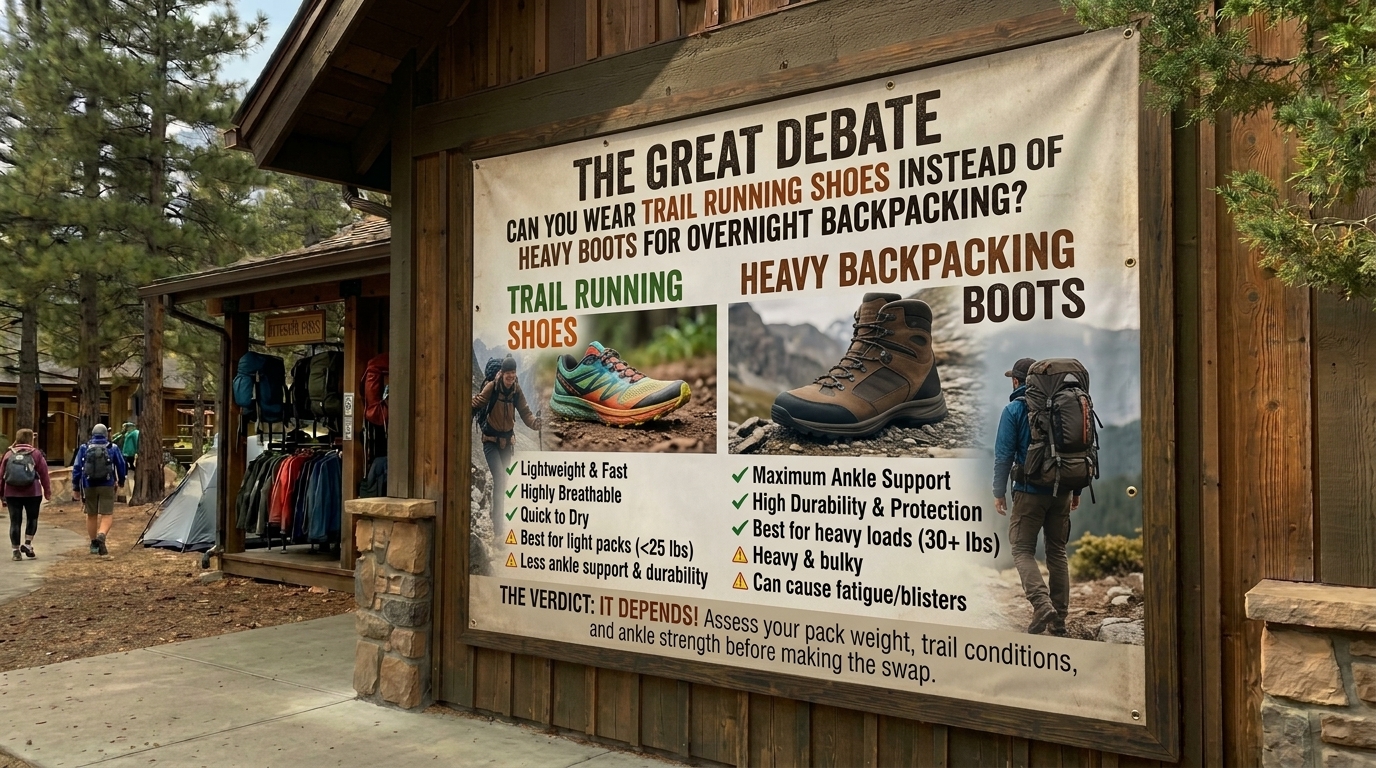
For decades, the unwritten rule of the backcountry was absolute: if you were heading out for an overnight backpacking trip carrying a multi-day pack, you had to lace up heavy, stiff, leather-bound hiking boots. Traditional outdoor wisdom preached that ankle support and rugged protection were non-negotiable for survival on uneven dirt tracks and rocky mountain ridges.
However, if you look at modern long-distance trails, thru-hikers on the Pacific Crest Trail (PCT), and Appalachian Trail (AT) veterans, a massive shift has occurred. Today, the vast majority of experienced backpackers have ditched traditional heavy boots entirely, opting instead for lightweight, agile trail running shoes.
This brings us to a crucial question for modern backpackers: Can you wear trail running shoes instead of heavy boots for overnight backpacking?
The short answer is yes, absolutely—for most hikers and most terrain. However, making the switch requires understanding the trade-offs in weight, ankle stability, durability, and moisture management.
The Paradigm Shift: Why Backpackers Are Ditching Heavy Boots
To understand why trail running shoes have become so popular for overnight backpacking, it helps to examine the mechanics of foot fatigue and weight distribution.
- The Ounce-Equals-Pounds Rule: There is an old adage in the outdoor community: a pound on your feet equals five pounds on your back. Lifting a heavy boot with every stride over a 15-mile day requires massive cumulative energy expenditure. Transitioning from a 3-pound pair of leather boots to a 20-ounce pair of trail runners drastically reduces leg fatigue, keeping you energized as dusk approaches.
- Superior Drying Speed: Heavy waterproof boots trap moisture. If you cross a stream or get caught in a downpour, waterproof membranes act like a sponge from the inside out, trapping sweat and water, which takes days to dry. Trail running shoes feature open mesh uppers that get wet when you cross a stream but dry out remarkably fast as you walk.
- Agility Over Immobilization: Modern podiatric science suggests that rigid high-top boots can weaken your ankle stabilizers over time by doing all the work for you. Flexible trail runners allow your foot muscles, tendons, and proprioceptors to flex and react naturally to the terrain, building intrinsic foot strength.
When Trail Running Shoes Shine (The Advantages)
Switching to trail runners for overnight backpacking offers incredible benefits, especially if your trips meet certain criteria:
1. High-Mileage Efficiency
If you are planning to crush high daily mileage (12 to 20+ miles a day), the featherlight construction of trail runners saves your legs from heavy, pounding exhaustion.
2. Mild to Moderate Technical Terrain
On well-maintained forest service roads, dirt singletracks, sandy coastal paths, and rolling hills, trail runners provide exceptional traction, flexibility, and comfort without feeling clunky.
3. Hot and Arid Environments
In dry climates (such as desert trips in California, Texas, or parts of Washington), breathable mesh trail runners dump heat instantly, preventing your feet from overheating and blistering.
When You Should Stick to Boots (The Limitations)
Despite their popularity, trail running shoes are not a universal cure-all. There are specific scenarios where traditional boots remain the safer choice:
- Heavy Expedition Packs: If your total pack weight exceeds 40 to 45 pounds (common for winter camping, mountaineering, or carrying specialized gear), trail runners lack the structural chassis and midsole support required to manage that heavy downward load.
- Brutal, Unmaintained Scree and Talus: If your overnight route traverses jagged, sharp boulder fields, slippery shale, or deep talus slopes, trail runners offer less underfoot rock protection and zero lateral ankle security if you slip.
- Sub-Freezing or Extremely Wet Conditions: If you are backpacking through freezing snowfields or constant cold rain, trail runners will freeze or soak instantly, risking cold-weather foot injuries unless paired with specialized waterproof socks (like Sealskinz).
Top Trail Running Shoes for Backpacking
If you decide to make the switch, look for models that bridge the gap between running agility and rugged backpacking durability:
- Altra Lone Peak (8 or All-Weather): Legendary for its wide toe box and zero-drop platform, allowing toes to splay out naturally under heavy loads.
- HOKA Speedgoat 5: Features max-cushioning foam that acts like a hovercraft over rocks, shielding your soles from bruising over long miles.
- Salomon Speedcross 6: Built with aggressive, deep-lugged outsoles that bite into mud and loose dirt like cleats, offering phenomenal traction on steep slopes.
- Brooks Cascadia 17: Integrates an internal rock shield that protects your forefoot from sharp stones and roots while maintaining a stable, balanced platform.
Essential Tips for Transitioning from Boots to Trail Runners
- Transition Gradually: Do not jump straight from rigid high-top boots into zero-drop or flexible trail runners on a brutal 3-day backpacking trip. Wear them on short day hikes first to give your Achilles tendons and calf muscles time to adjust to the change in heel drop and flexibility.
- Embrace Wool Socks: Pair your trail runners with high-performance Merino wool hiking socks. Even though your shoes will get wet when crossing streams, Merino wool retains its insulating properties and prevents friction blisters when damp.
- Pack a Pair of Camp Shoes: At the end of a long day on the trail, taking off your trail runners and slipping into lightweight camp sandals lets your feet breathe and recover overnight.
10 Frequently Asked Questions (FAQs)
1. Won’t I roll my ankle without high-top boots?
Studies show that ankle sprains happen with equal frequency in boots and low-top shoes. Ankle rolls are primarily caused by fatigue, poor balance, or stepping awkwardly. Strengthening your lower leg muscles through trail runners actually reduces long-term injury risks.
2. How do I keep my feet dry in non-waterproof trail runners?
In breathable trail runners, you don’t try to keep them dry—you accept that they will get wet in streams and dry quickly as you hike. As long as you wear moisture-wicking wool socks, wet feet in breathable shoes rarely cause blisters compared to trapped sweat in waterproof boots.
3. How many miles do trail running shoes last when backpacking?
Because trail runners use lighter, softer foam and mesh, they typically last between 350 to 500 miles of backpacking use before the midsole foam compresses flat and loses its shock absorption.
4. Can I carry a heavy multi-day backpack in trail running shoes?
If your pack weighs under 35 pounds, trail runners handle it easily. If your pack weighs over 45 pounds, the lack of a rigid torsional shank in trail runners can cause foot fatigue and arch strain.
5. Are waterproof trail running shoes better than non-waterproof ones?
For most backpackers, non-waterproof mesh trail runners are preferred because they breathe and dry rapidly. Waterproof trail runners (like GORE-TEX versions) trap sweat once water inevitably splashes over the ankle collar, making them harder to dry out.
6. Do trail runners provide enough underfoot protection against sharp rocks?
High-end backpacking trail runners (like the Brooks Cascadia or HOKA Speedgoat) feature embedded rock plates or thick high-volume midsoles specifically designed to prevent sharp stones from bruising the bottom of your feet.
7. Why do thru-hikers overwhelmingly prefer trail running shoes?
Thru-hikers prioritize weight reduction and comfort above all else. Saving pounds on your feet translates to massive energy savings over thousands of miles, drastically reducing overuse injuries and joint pain.
8. How do I prevent debris and small pebbles from getting into my low-top shoes?
Wearing lightweight trail running gaiters (such as Dirty Girl Gaiters) creates a physical seal between the top of your shoe and your sock, keeping sand, dirt, and gravel completely out.
9. Can I use custom orthotics or aftermarket insoles in trail runners?
Yes. Just like hiking boots, most trail running shoes have removable factory insoles that can be swapped out for custom orthotics or supportive aftermarket insoles (like Superfeet) for enhanced arch support.
10. What is the best way to dry overnight trail runners at camp?
Pull out the removable insoles, empty any accumulated mud or grit, and prop the shoes up against a log or rock to catch the evening breeze. Never place them directly over a campfire, as intense heat melts shoe adhesives.
Conclusion
Switching from heavy, traditional boots to lightweight trail running shoes for overnight backpacking is one of the most liberating gear upgrades you can make. By shedding pounds of dead weight from your feet, you unlock greater agility, faster drying times, and significantly reduced leg fatigue. While heavy boots still hold a place in extreme mountaineering and ultra-heavy expeditions, trail running shoes provide more than enough comfort, traction, and protection for the vast majority of overnight backpacking adventures.
Leave a Reply