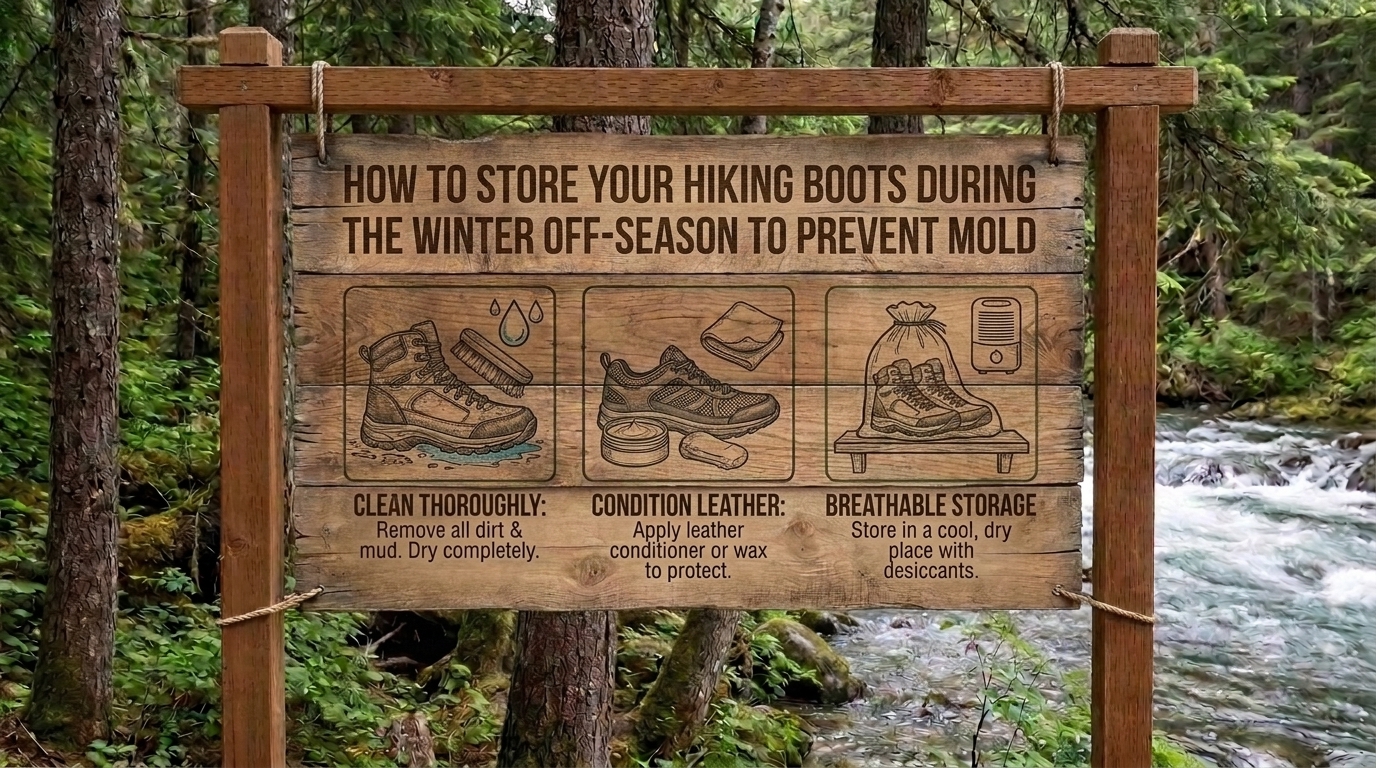
When the hiking season winds down and freezing temperatures, snow, or muddy trails force you indoors, your gear usually gets relegated to the back of a closet, a garage shelf, or a basement. However, throwing your high-performance hiking boots into a dark corner without proper preparation is an invitation for disaster.
By spring, you might pull them out only to find a fuzzy bloom of green-and-white mold coating the leather, ruined insoles, or midsoles that have degraded due to trapped moisture.
Whether you store your gear in a humid climate like New York or Washington, or dry out your boots after adventures across California, Texas, or San Francisco, proper off-season storage is mandatory. This comprehensive guide details step-by-step methods to clean, condition, and store your hiking boots safely over the winter to keep mold at bay and extend their lifespan for years.
1. Why Winter Storage is High-Risk for Mold and Sole Rot
Mold spores are microscopic and omnipresent in the air, but they only colonize and thrive when two conditions are met: organic food sources (like mud, sweat, skin cells, and natural leather tannins) and excess moisture (relative humidity above 60%).
When you finish your final autumn hike, your boots harbor unseen sweat salts deep inside the lining, along with microscopic organic debris tucked into the welt and tread. If stored in a cool, damp space like a basement or an unheated garage, these elements trigger rapid fungal growth.
Worse yet, trapped humidity accelerates hydrolysis—the chemical breakdown of polyurethane midsoles that causes them to crumble or delaminate while sitting unused.
2. Step-by-Step Guide: Preparing Your Boots for Winter Storage
Never store dirty or damp boots. Follow this rigorous 4-step maintenance ritual before tucking your boots away for the winter off-season.
Step 1: Deep Cleaning (Inside and Out)
- Strip the Hardware: Remove the laces completely. Laces trap dirt in their weaves and hide grime around the eyelets. Wash them in warm soapy water and let them dry.
- Remove the Insoles: Pull out the footbeds. Wash and dry them separately. This exposes the interior boot cavity for cleaning and drying.
- Scrub the Exterior: Use a stiff-bristled brush and lukewarm water (avoid harsh chemical detergents) to scrub away all caked-on mud, clay, and grit from the uppers and soles. Pay special attention to the rand and the crevice where the sole meets the upper.
Step 2: Bone-Dry Conditioning
- Natural Room-Temperature Drying: Place your boots in a well-ventilated room out of direct sunlight. Never use direct high-heat sources like camp stoves, space heaters, or hair dryers, as extreme heat cracks leather, melts adhesives, and warps synthetic frames.
- Condition Leather Uppers: Once completely dry, apply a quality leather conditioner or natural oil (such as Obenauf’s or a specialized conditioner suited for your boot type). Conditioning restores lost natural oils, keeps the leather supple, and prevents cracking over the long winter months. For synthetic or Gore-Tex mesh boots, apply a safe technical water-repellent (DWR) spray while the fabric is still slightly damp from cleaning.
Step 3: Structural Support (Shoe Trees)
- Insert Cedar or Plastic Shoe Trees: Do not let your boots collapse or distort in storage. Insert cedar shoe trees or tightly pack the toe box and ankle shafts with clean, acid-free packing paper or old cotton t-shirts. Cedar shoe trees offer the added benefit of absorbing residual interior moisture while releasing natural antimicrobial oils that deter pests and odors.
Step 4: Climate-Controlled Environment
- Choose the Right Spot: Store your boots in a cool, dry, climate-controlled space inside your living area. Avoid basements, damp crawlspaces, uninsulated garages, and hot attics.
- Breathable Containers: Place your boots in a breathable container, a cloth storage bag, or leave them sitting openly on an elevated closet shelf. Never store boots long-term in sealed, non-breathable plastic bags, which trap ambient humidity and create a greenhouse effect for mold. Toss a few silica gel packets into the toe box for extra humidity defense.
3. Frequently Asked Questions (FAQ)
1. Can I store my hiking boots in their original cardboard shoeboxes?
Yes, cardboard boxes are breathable and work well for storage, provided the storage area is dry. However, ensure the room’s humidity stays low. If the cardboard feels damp to the touch, discard the box and store the boots on an open wire shelf.
2. What should I do if I pull my boots out of storage and find mold on them?
Don’t panic. Mix a 50/50 solution of water and white vinegar, dip a clean cloth into it, and gently wipe down the moldy areas. Vinegar kills mold spores at the root. Once wiped clean, let the boots dry completely outdoors in a shaded, breezy spot, and recondition the leather.
3. Are cedar shoe trees better than newspaper for winter storage?
Cedar shoe trees are vastly superior for long-term storage. While crumpled newspaper works great for quick overnight drying by absorbing moisture, it breaks down over months, loses its absorbency, and can leave newsprint ink stains inside your boot lining. Cedar actively absorbs moisture and fights odors continuously.
4. How does winter storage affect the lifespan of polyurethane boot midsoles?
Inactivity combined with humidity is the primary catalyst for hydrolysis (sole rot). When polyurethane sits stagnant in a humid environment, moisture breaks down its chemical polymer chains. Storing your boots in a bone-dry, climate-controlled space dramatically reduces this risk.
5. Should I apply heavy waterproof wax before putting boots in storage?
Avoid heavy, thick layers of wax for winter storage. Heavy waxes can seal the leather pores too tightly, trapping microscopic residual moisture inside the hide. Instead, use a light, breathable conditioning oil or cream.
6. Is it safe to store hiking boots in an attic or a garage over the winter?
No. Garages and attics experience extreme temperature fluctuations and high humidity swings. Freezing winter cold followed by damp spring thaws creates condensation cycles inside storage containers, ruining leather and encouraging mold growth.
7. How often should I check on my boots during the winter off-season?
It is good practice to inspect your stored boots once a month. Check the welt, sole junctions, and leather uppers for any early signs of white powdery mildew, sticky residue, or abnormal stiffness.
8. Can I use rice packets inside my boots to absorb moisture during storage?
Using rice is discouraged. While rice absorbs water, it is inefficient for enclosed spaces and can leave behind a fine, starchy dust inside the boot lining that actually feeds mold spores and attracts pests. Use silica gel packs or cedar blocks instead.
9. Do synthetic mesh hiking boots require different storage than leather boots?
The storage environment (cool, dry, breathable) remains identical. However, synthetic boots do not require leather oil conditioning. Instead, ensure they are thoroughly washed free of dirt, completely dried, stuffed to maintain their shape, and kept away from direct sunlight to prevent fabric UV degradation.
10. What is the ideal room temperature and humidity for boot storage?
Aim for a storage space with a stable room temperature between 15°C to 20°C (60°F to 68°F) and a relative humidity level strictly kept below 60% to completely halt mold spore germination and fungal growth.
Conclusion
Properly storing your hiking boots over the winter off-season takes only a small amount of effort—cleaning, conditioning, shaping, and finding a dry climate-controlled shelf—but it pays off immensely. By taking these steps, you protect your investment from destructive mold, prevent premature sole failure, and ensure your footwear is fresh, durable, and ready to tackle the trails the moment spring weather arrives.
What specific storage challenges or climate conditions do you face when putting your outdoor gear away for the off-season?
Leave a Reply